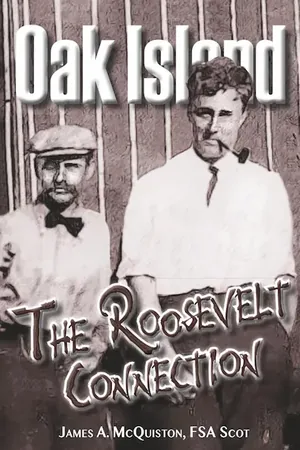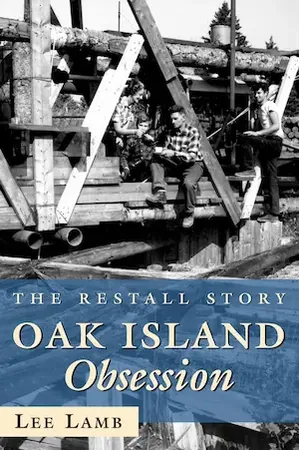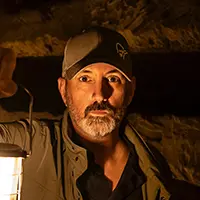
Frederick Gerald Nolan was born in Halifax, Nova Scotia, on July 5, 1927. He attended Oxford Street and College Street schools before enrolling at St. Mary's High School, where he developed the precision and discipline that would define his professional life. He became one of the first land surveyors in Nova Scotia to earn the designation PLS, Provincial Land Surveyor, and with his brother Richard established Nolan Brothers Surveys. The firm built a strong reputation across the province. Among their early projects were the layout of the entire Westmount Subdivision at the site of the old Halifax airport on Chebucto Road, the surveying of what became the first Sobeys store in the Halifax Regional Municipality, and the development of the Lewis Lake subdivision. Nolan loved working outdoors, and his chosen profession served him well in that regard. He was methodical, exacting, and stubborn in the way that good surveyors tend to be. Then, sometime in the late 1950s, he read a book that redirected the rest of his life.
The Free Survey
2 min
The book was R.V. Harris's The Oak Island Mystery, published in 1958. Nolan read it forward and backward, at least half a dozen times by his own account. He was particularly fascinated by the 1937 survey conducted by provincial land surveyor Charles Roper for treasure hunter Gilbert Hedden, which had identified links between the stone triangle near Smith's Cove, the Cave-in Pit, and a series of drilled boulders. Nolan believed his own professional skills could succeed where others had failed. He discovered that Harris's law office in Halifax was only a few blocks from his own surveying office and began paying regular visits. Harris seemed to welcome the company, even when the younger man peppered him with questions about every detail of the treasure hunt's long history.
Nolan first set foot on Oak Island in 1957, just as George Greene's operations were winding down. He returned to poke around further, only to be informed by the island's owner, Mel Chappell, that the Harman brothers were about to take over the treasure hunt and that Robert Restall was waiting behind them. Undeterred, Nolan proposed surveying the entire island, at his own expense and on his own time. Chappell, reasoning that he was getting an expensive professional service for free, agreed.
What Nolan did not tell Chappell was that he had been horrified by the damage the older man was inflicting on the island's surface with a drag line, a tractor pulling a digging bucket that tore up everything in its path. Nolan feared that valuable landmarks were being obliterated, and he pressed to survey immediately before more were lost.
Through 1961 and 1962, Nolan spent thousands of dollars on labour and equipment and devoted hundreds of hours his family wished he were putting into his business. He laid out a grid that covered every inch of Oak Island, installing twenty-three concrete survey markers, each crowned with a numbered bronze disk on which a transit or theodolite could be mounted. The transit lines he cut through trees and brush stretched for tens of thousands of yards. Nolan was also the first person to photograph the stone triangle near Smith's Cove and to survey it precisely, actions that would be much appreciated decades later, after Robert Dunfield destroyed the triangle in his 1965 excavation. It was backbreaking work, nearly all of it done by Nolan himself.
 The Chappell Family and the Vault Beneath Oak Island→
The Registry of Deeds
1 min
In late 1962, convinced that his survey had accomplished something important, Nolan arranged a meeting with Chappell and proposed leasing the search rights. Chappell already had the Restall family installed on the island and was holding out for someone willing to spend serious money. Whether it was because Nolan was pushy or Chappell was testy, the conversation ended with Mel telling the surveyor to "get off my damn island and go to hell."
Instead, Nolan went to the Registry of Deeds in Chester. He was, as he later put it, "playing a hunch." That hunch paid extraordinary dividends. Tracing the Oak Island records back to 1935, when Gilbert Hedden had bought land from the heirs of Sophia Sellers, Nolan found that the deed office records stated Hedden had purchased only lots 15 through 20. A separate survey plan from September 1935 indicated Hedden had bought 52 acres, which should have included lots 5 and 9 through 14, but the legal conveyances did not match. The same discrepancy carried forward through the 1950 sale from Hedden to John Whitney Lewis and from Lewis to Chappell. Seven lots in the centre of the island had never been properly conveyed.
Nolan immediately visited the last remaining Sellers heirs, two elderly sisters living on the mainland, and arranged to purchase lots 5 and 9 through 14 for $2,500. In April 1963 he went to Chappell without making arrangements for a meeting, showed him the deeds to seven lots comprising roughly a quarter of Oak Island, and offered to trade the property for a lease on the Money Pit. Chappell reacted with fury, calling Nolan a sneak and again ordering him off the property. He hired R.V. Harris to investigate. Harris reported back that it appeared Nolan's claim was valid.
Fred was disappointed that Chappell had rejected his offer, but he soon realized what he held. His seven lots formed a swath across most of the east end of the island, and anyone travelling from the west to the Money Pit would have to cross his land.
The Swamp
2 min
Nolan spent the following years conducting his own search on the property he now owned. He found rocks with round holes bored or chiselled into them, some with pieces of metal inserted. He excavated pieces of old hand-cut wood that he believed were from an ancient chest, one piece with old iron hinges still attached. He discovered sandstone rocks that had been cut to leave two smooth sides and two rough, standing on end in positions a geologist confirmed were not natural resting states. Burn marks on the stone indicated that heat had been used in the cutting. Nolan eventually concluded that the sandstones were not native to Oak Island but had been brought there to serve as survey markers, placed by human hands centuries before his own.
He was convinced that the treasure everyone sought lay in a watertight vault at the end of a tunnel running from, or possibly not even connected to, the Money Pit. He searched for that tunnel on his own property for years. His reluctance to reveal anything more than he absolutely had to created a haze around his work that no one would ever entirely penetrate.
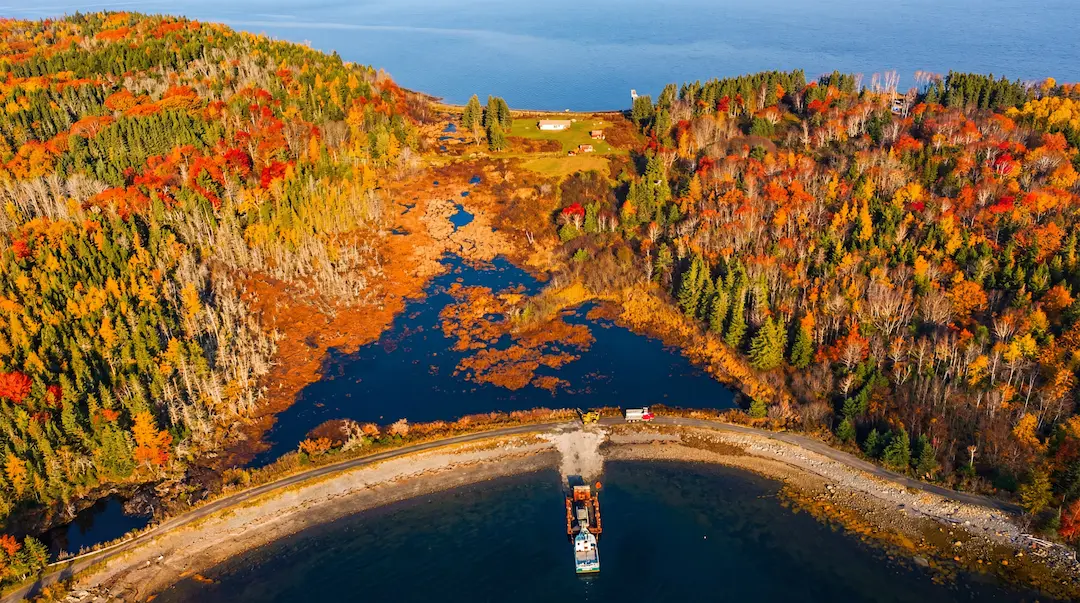
In 1969, Nolan undertook his most ambitious project: draining the Oak Island swamp. The cost was considerable, involving substantial labour and heavy equipment. He did not find the tunnel entrance or the treasure vault, but he discovered numerous markers, among them spruce stakes driven into the ground that had clearly been placed for some purpose of identification. He also found what he believed to be a gold-branding bar, parts of a sailing vessel including sections of a spar and a scupper, and part of a wooden ship's gunwale. He was convinced that the swamp had once been low-lying dry ground, used possibly as a docking or boat-repair yard, and that it had been artificially created by holding back water with a cofferdam, digging out the triangle shape, and then letting it fill with freshwater. The spruce stakes would later be carbon-dated to as far back as approximately 1550, well before the accepted era of treasure searchers.
 The Swamp→
Two Men, One Island
3 min
By 1969, the year Nolan drained the swamp, the biggest story on Oak Island was no longer what lay underground. It was the war above it.
The conflict had its roots in 1965, when Robert Dunfield, who had absorbed the animosity toward Nolan from his then-partner Mel Chappell, built the causeway connecting Oak Island to the mainland and posted an armed guard at its entrance. Dunfield himself used to sit there with a rifle, Nolan said, and threaten to shoot him if he tried to drive onto the island. Nolan was forced to use a boat to reach his own property and to barge out his equipment.
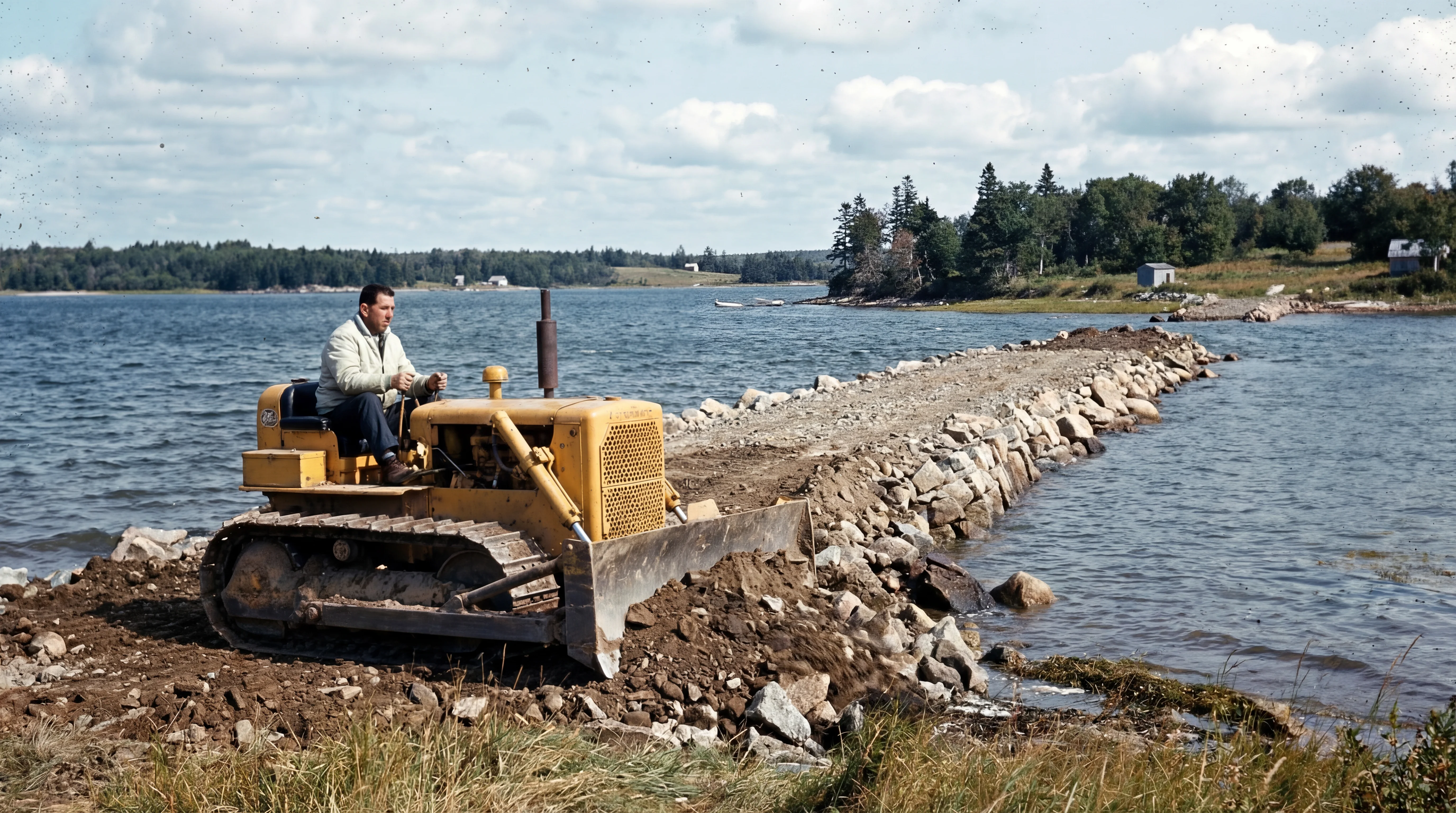 Robert Dunfield and the Destruction of Oak Island→
When Dunfield left Nova Scotia, a new figure arrived. Dan Blankenship was a building contractor from Miami, Florida, who had read about Oak Island in the January 1965 issue of Reader's Digest. The two men had arrived by different paths (Nolan through Harris's book in 1958, Blankenship through a magazine article seven years later) but shared a profile that was almost eerily similar. Both were skilled professionals who had given up stable careers. Both had come to believe the treasure was real. Both were willing to spend everything they had to find it.
The early relationship was functional. Blankenship paid Nolan $1,000 to remove a barricade Nolan had erected at the causeway entrance, and in return gave Fred permission to use the causeway. The arrangement evolved into a deal that gave Nolan a small share of the Money Pit operation in exchange for surveying work and a right of way through his property. In 1967, Canada's centennial year, the situation was amicable enough that Nolan built a museum at Crandall's Point, where he exhibited artifacts he had collected on the island and negotiated a deal with the Department of Tourism to collect a percentage of public tour revenue.
All of those agreements were annulled in 1969, when David Tobias and Blankenship formed Triton Alliance. After each side accused the other of breach of contract, Nolan blocked the causeway entrance. Triton built a bypass road. Triton chained off the causeway where it touched island land, forcing Nolan back onto boats. Nolan chained off the trail to the Money Pit that ran through his property, cutting Triton's road access to the east end of the island entirely. The confrontations escalated to what were described as nose-to-nose shouting matches, though Sullivan noted these were technically Fred's nose to Dan's chin. One afternoon in 1970, Blankenship became so incensed that he confronted Nolan at the chain armed with a hunting rifle. Nolan called the Royal Canadian Mounted Police, who arrived in time to find Blankenship still manning the chain with the rifle in his hands. They confiscated the weapon.
By late 1971, both sides were exhausted enough to negotiate a truce. Triton would receive at least 40 percent of any treasure found on Nolan's land; Nolan would get causeway access and a promise that Triton would not challenge his ownership of the seven lots. It held for a few years. But with the stakes high and bad blood already between them, it was, as Mark Finnan later wrote, a shaky relationship at best.
What made the rivalry more than a property dispute was how much the two men had in common. Both had rejected the Money Pit orthodoxy: Nolan believed the treasure lay in a tunnel and vault elsewhere on the island, while Blankenship had staked everything on Borehole 10-X, drilled 180 feet northeast of the Pit. Both had independently pursued Spanish maritime connections. Nolan studied documents and maps from the maritime libraries and museums of Spain, tracking treasure ships that may have been storm-driven into the coast of Nova Scotia. Blankenship arrived at a similar theory through his own research, and by 2003 was publicly claiming a Spanish solution to the mystery. Both men described their situation in language that was almost identical. Nolan told Finnan in December 1994: "I guess in a way I've created my own living hell and it's not easy to get out of it." Blankenship, separately, told a British newspaper: "I'm here now until I get the treasure or it gets me."
 Dan Blankenship and Borehole 10-X→
The Court Battle
2 min
In January 1983, Triton Alliance filed a lawsuit against Fred Nolan, challenging his legal ownership of the seven lots. David Tobias said he had no choice: Nova Scotia's twenty-year statute of limitations on civil action was about to expire, and any attempt to recover the lots would have to be made now or never. Tobias also argued that Triton needed a resolution if it was going to attract the financial backing required for a major Money Pit operation.
The resulting litigation consumed more than two years and tens of thousands of dollars. Triton's lawyers submitted upward of a thousand documents. Nolan's own attorneys billed him for countless hours of discovery. The financial damage extended far beyond legal fees. Triton had successfully portrayed Nolan in the press as a kook, and the companies that hired him to testify as an expert surveyor in court became leery of putting a man publicly identified as a "treasure hunter" on the witness stand. That part of his business evaporated almost completely. Fred made up his mind that he was going to fight to the bitter end.
On December 17, 1985, Nova Scotia Supreme Court Justice A.M. MacIntosh upheld Nolan's claims to all seven lots and dismissed Triton's trespassing allegations. The judge ordered Nolan to pay Triton $15,000 for interfering with its tourism business and to move his museum off the causeway path. Dan Blankenship would later describe that day as the worst of his life.
Within weeks, Tobias instructed his lawyers to appeal, despite warnings from his own son Norman, a Toronto attorney, that Triton's chances were slim and the additional fees would run at least $20,000. Part of the motivation was Tobias's wish to control every inch of Oak Island. In 1977 he had acquired all of Mel Chappell's holdings for $125,000, giving him roughly 78 percent of the island. Only the Blankenship house lot and Nolan's seven lots remained outside his control. Tobias offered to buy Nolan's land for $125,000, the same price he had paid Chappell for nearly four times as much property. Nolan refused to sell, "for any price," and filed his own cross complaint.
The ruling on the appeal was issued on April 15, 1987. Fred had won again. The $15,000 he had been ordered to pay Triton was reduced to $500. By then, Nolan estimated he had spent $75,000 on lawyers. The losses from his survey business exceeded a quarter of a million dollars. He was forced to spend an additional $80,000 to construct a dock on his property because the only access he had to the island was by boat, and barging equipment out was, as he put it, very expensive.
What surprised Sullivan when he interviewed both men in 2003 was that Nolan's bitterness was directed more intensely at Blankenship than at Tobias. After the appeals court ruling, Tobias had congratulated Fred, handed him one of his expensive Cuban cigars, and taken the position that it had all been business, nothing personal. Nolan accepted that. Of Blankenship, however, his assessment was blunt: "Dan wanted to destroy me. And he was willing to do anything, no matter how dirty, to do it." Blankenship said much the same about Nolan.
Nolan's Cross
2 min
In 1981, while conducting survey work on his property, Nolan uncovered what would become his most significant contribution to the Oak Island mystery. Five massive cone-shaped granite boulders, each weighing up to ten tons and measuring roughly eight by nine feet, were arranged across the centre of the island in a symmetrical Latin cross. The stem of the cross measured approximately 720 feet; the arms spanned 867 feet. A sixth stone at the intersection of the stem and arms was different from the others: it was sandstone rather than granite, and it appeared to be shaped like a human head, with features resembling a forehead, an eye, a nose, and a mouth. Nolan concluded that the headstone symbolized the "brain" and a dagger-like indentation pointed to the "heart." He believed the cross contained a mathematical equation, though he never elaborated on what he meant by that.
Nolan spent years excavating carefully around and beneath the boulders, marking their positions with the precision of a man who had spent his career doing exactly that. Beneath the boulder at the end of the south arm he found a layer of small beach stones and parts of a ship's pot-belly stove. He could not explain how either came to be there. He had the formation examined and verified by Halifax engineer and surveyor William Crooker before going public with the details in the summer of 1992, more than a decade after the initial discovery. Halifax geologist Petra Mudie confirmed that the formation was not a product of glacial action.
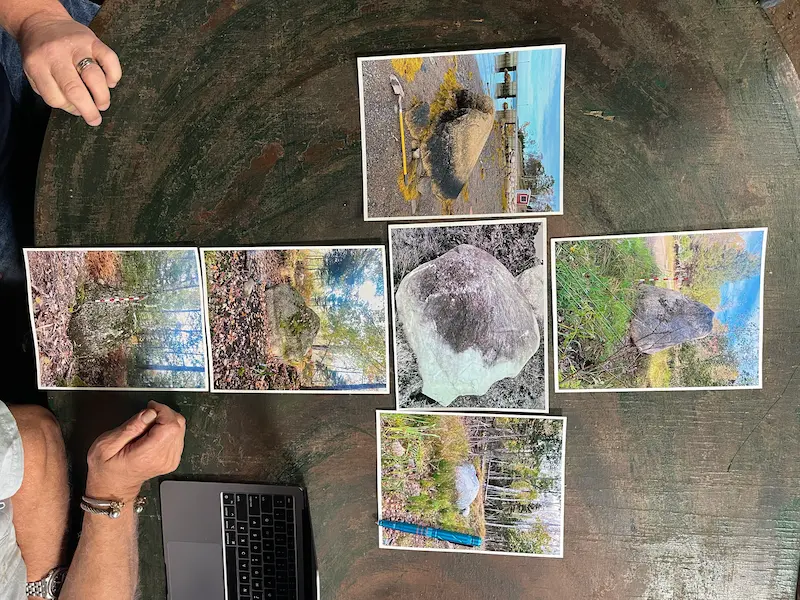 Nolan's Cross (5 boulders)→
In the 1990s, Nolan continued his analysis using offset sightlines of the cross and identified a secondary feature he called the Quadrilateral, located about 200 feet from the top of the cross on the north side. It consisted of three layers of boulders with a longest side of 32 feet.
In 2022, archaeoastronomer and astrophysicist Professor Adriano Gaspani of the Brera Astronomical Observatory in Milan conducted a positional analysis of the cross using the coordinates of its unmoved stones. His calculations placed its construction at approximately 1200 AD, a date consistent with the Templar period and the broader body of archaeological evidence from the island. Gaspani later extended his analysis to the Stone Triangle and the stone cairns on Oak Island, identifying the Templars as the most likely builders of all three formations.
 The Geometry of Nolan's Cross→
The Thaw
2 min
For decades, Nolan worked alone. He told a local reporter he was on to "something big" but refused to reveal what it might be. In 1982 he confided to a handful of people that he had verified his great discovery, but he was not ready to reveal it publicly. He was still studying his grid, searching for new levels of meaning. He told Finnan during a meeting in December 1994 that no one would believe him if he explained what he thought, and so he would continue working until he found the treasure or died in the process.
The change came with the arrival of Rick and Marty Lagina. Rick, in particular, won Nolan over more thoroughly than anyone ever had. Sullivan, who observed the relationship, attributed it to Rick's enthusiasm for the treasure hunt combined with his genuine respect for those who had conducted it before him. Nolan was eighty-seven years old by then, far more gaunt and frail than he had appeared in 2003. Some of the frost on the old fellow, as Sullivan put it, had melted.
In 2015, during the third season of The Curse of Oak Island, Rick brokered a historic agreement. Nolan came to the War Room for the first time and agreed to cooperate. After decades of secrecy, he declared that he no longer wanted to be an obstacle and was ready to share his research. He brought his detailed survey maps, representing more than fifty years of fieldwork across 104 individual maps. Unlike most treasure hunters who had focused on the Money Pit, Nolan had spent his career documenting the stone markers, carvings, and surface features across the entire island.
He also revealed his theory about the treasure's origin: during the American Revolution, King George III ordered British generals to gather gold, silver, and jewels from the colonies and ship them to Halifax. According to Nolan, a group of officers conspired to hide a large portion on Oak Island as both compensation and insurance against an uncertain future.
The first joint drilling operation on Nolan's property, near the centre of the island, found no cavity at the expected depth. But the second, targeting a site Nolan called the old well just north of the swamp, produced something. The drill hit a five-foot void. Nolan was visibly elated. It was not definitive proof of a man-made structure, but it was the first time drilling on his property had returned evidence consistent with an underground chamber. With the cooperation now in place, virtually every acre of Oak Island was available for exploration for the first time in nearly half a century.
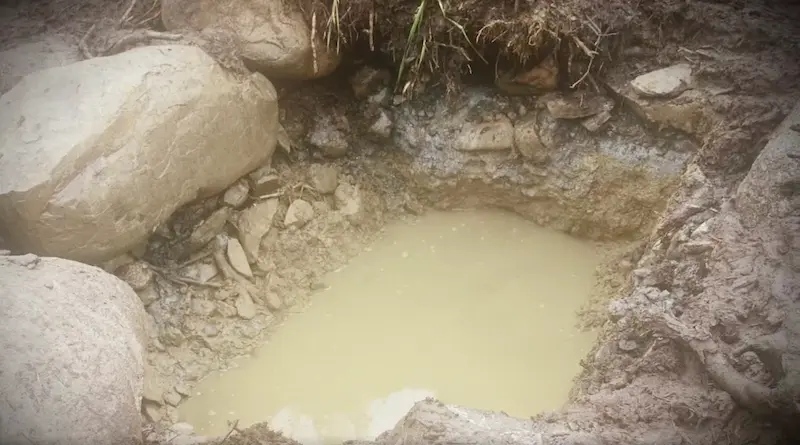 Stone well (Lot 11)→
The Inheritance
2 min
Frederick Gerald Nolan died on June 4, 2016, at the QE2 Halifax Infirmary in Halifax, after a short illness. He was eighty-eight years old. A funeral Mass was held at Saint Theresa's Catholic Church on the corner of North and Dublin Streets. Roughly one hundred people gathered for the service, and he was buried in a private family interment at Gate of Heaven Cemetery in Lower Sackville. He was survived by his wife of fifty-three years, Ora Miller, their son Thomas, granddaughters Catherine and Shannon, and his brother Frank.
Rick Lagina read a tribute to surveyors in Nolan's memory. He later told Sullivan that what pained him most was that Fred had not lived to see what the team was about to undertake. The older Lagina brother sounded sincere when he said it, though he also acknowledged a harder truth. Nolan's son Tom, who felt he had already lost his father to Oak Island many years earlier, was not ready to make decisions about how to dispose of the enormous collection of objects and documents Fred had accumulated in more than fifty years of searching. Promises made to Rick but never put in writing were, as Sullivan observed, just whispers in the wind.
In time, Tom Nolan found his own relationship with the island. In 2017 he granted the Laginas full access to Fred's sixteen acres, including the area surrounding Nolan's Cross. By 2019, Tom had joined the team as a full-time member, uniting all major Oak Island landowners for the first time since his father and Dan Blankenship began their feud half a century earlier. Fred's maps, his survey data, his stone marker documentation, and his drilling records now feed a search he spent fifty-eight years conducting alone.
Between Nolan and Blankenship, who died in 2019, the two rivals represented 110 years of dedicated searching on Oak Island. Neither man found the treasure. Both believed until the end that it was there. The island took everything each of them had to give, and the fact that Fred Nolan's name appears in 105 of the show's 260 episodes is a measure of how much his work, conducted largely in isolation and secrecy, turned out to matter.
Sources
1 min
Published :
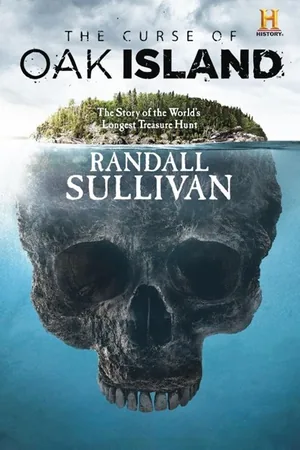
- Randall Sullivan, The Curse of Oak Island: The Story of the World's Longest Treasure Hunt (Atlantic Monthly Press, 2018). Chapters 15 and 24. Principal narrative source. Sullivan interviewed Nolan in 2003 and observed the Nolan-Lagina relationship during 2016-2017 visits. Primary source for the survey, the Registry of Deeds acquisition, the Blankenship-Nolan feud, the Triton lawsuit, and the final years.
- Mark Finnan, Oak Island Secrets (Formac Publishing, 1995). Chapters 12 and 14. Personal interviews with Nolan in 1993 and 1994-1995. Source for the Nolan's Cross discovery narrative, the court case, the causeway conflicts, and the December 1994 quote ("I've created my own living hell").
- Scott Clarke, Oak Island Odyssey (Nimbus Publishing, 2023). Confirms 1985 court ruling and appeal; Borehole 10-X casing collapse chronology; 1971 Nolan treasure trove licence.
- Obituary of Frederick G. Nolan of Waverly.
Scientific analysis:
- Professor Adriano Gaspani, Brera Astronomical Observatory, Milan. Archaeoastronomical positional analysis of Nolan's Cross using coordinates of unmoved stones. Dating result: approximately 1200 AD, consistent with the Templar period. Extended analysis to Stone Triangle and stone cairns; identified Templars as most likely builders. Presented to the team Season 10, Episode 22 ("Starry Knights") and Season 11, Episodes 16-17.
- Petra Mudie, geologist, Halifax. Confirmed Nolan's Cross boulders were not a product of glacial action.
- William Crooker, engineer and surveyor, Halifax. Verified the formation and measurements of Nolan's Cross prior to Nolan's 1992 public disclosure. Author of Oak Island Gold.
- Radiocarbon dating of spruce stakes from swamp drainage (originally found by Nolan, 1969). Carbon-dated to approximately 1550, predating the recognized era of treasure searchers. Confirmed Season 7, Episode 11.
The Curse of Oak Island episodes
- TheCurseOfOakIsland.com episode database. Fred Nolan or Nolan's Cross referenced in 105 of 260 episodes across 13 seasons (direct count from episode descriptions).