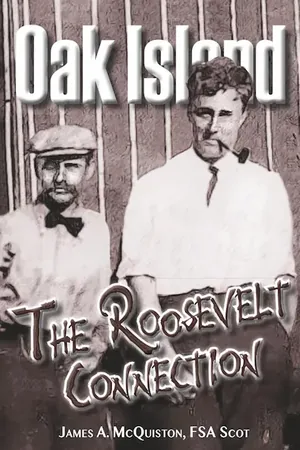
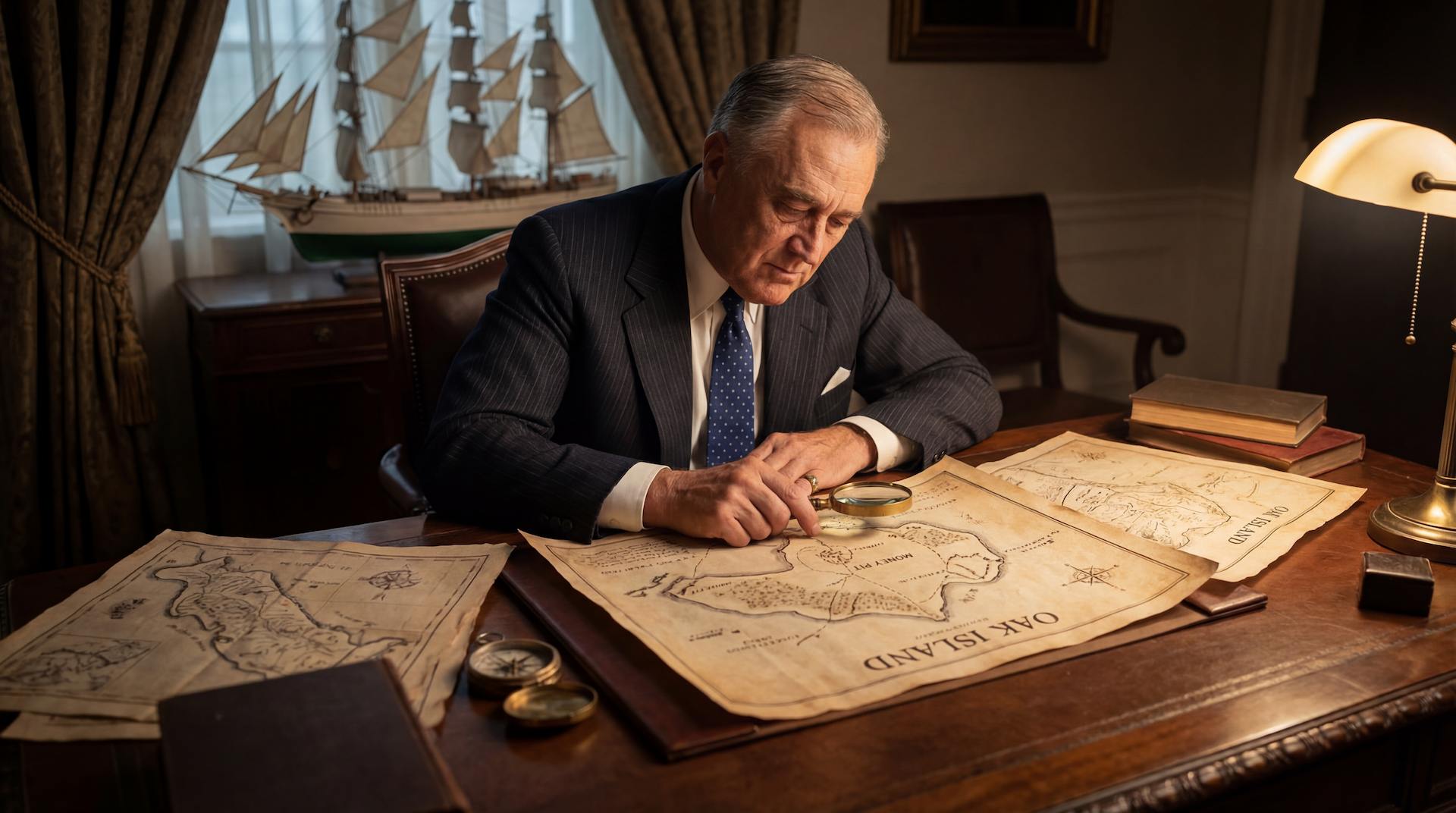
In the spring of 1909, a New York engineer named Henry Livingston Bowdoin told the New York Herald that he could solve Oak Island in a fortnight. By the following summer his company was finished. By the summer after that, he had published an article in Collier's declaring the whole story a delusion. He kept writing, even so, and one of his correspondents was a young law clerk at Carter, Ledyard and Milburn in Manhattan who had bought ten shares of the venture in 1909 and would later occupy the White House. The Bowdoin chapter of Oak Island and the Franklin D. Roosevelt connection are entangled at every point.
 The Roosevelt Connection→
 Collier's: Solving the Mystery of Oak Island→
The New York Herald Announcement, March 1909
1 min
On March 18, 1909, Bowdoin appeared in print at the offices of 44 Broadway in Manhattan. The New York Herald described him as a mining, mechanical and marine engineer, a master mariner and pilot, and a licensed submarine diver. He had dredged harbors, built bridges, and held government contracts. Modern machinery and engineering science, he told the paper, would solve in a jiffy the difficulties Captain Kidd made to guard his treasure. He had reached an agreement with Frederick Blair, the Amherst insurance agent who held the treasure rights to the island, for the apportionment of the ten million dollars he estimated the buried valuables would be worth. Six handpicked men would leave for Nova Scotia by rail on the first of May, with the machinery sent ahead by schooner. The cost he placed at fifteen thousand dollars. "Any competent engineer could clear up that affair in no time," Bowdoin said. "I don't want more than two weeks for the work."
A shorter piece in the New York Times the same day reported him admitting he had not yet decided how to reach the treasure. He might sink a caisson, or build a cofferdam, or send a diver down with a pick-axe. He had never been to the island. He would decide once he arrived. The Times piece also recorded an unusual claim that did not appear in the Herald: what was buried on Oak Island, in Bowdoin's view, was not the Captain Kidd treasure at all, but the crown jewels of France.
 Captain Kidd and the Hidden Maps→
 The Jewels of Marie Antoinette→
The Old Gold Salvage and Wrecking Company
1 min
By May 1909 Bowdoin had reconsidered the cost. He told the New York Sun it was too big a job to tackle without selling a little stock first. The Old Gold Salvage and Wrecking Company was incorporated in the Arizona Territory in April 1909, with offices in New York. Authorized capital was $250,000, offered to the public as 250,000 shares of one dollar each. The prospectus, which Bowdoin wrote himself, opened with a brisk history of the search and an even brisker promise: failure had been due to lack of modern machinery and ignorance, and recovery would now be "easy, ridiculously easy." A return of 4,000 percent was offered on each share. Operations would begin in May or June and be completed in three or four weeks.
The board reflected the partnership Bowdoin had assembled with Blair. Bowdoin was president. Blair was vice president. The treasurer was a New York attorney and the secretary an accountant. Captain John W. Welling, who had worked on the Oak Island Treasure Company expedition of the 1890s, sat on the board as an experienced hand.
The capital did not arrive. By the time the company sailed for Nova Scotia in August, only about five thousand dollars in stock had been sold. Among the small investors was Franklin Roosevelt, then a twenty-seven-year-old clerk at Carter, Ledyard and Milburn. Roosevelt purchased ten shares and persuaded several friends to do the same. The investment was examined at the Franklin D. Roosevelt Presidential Library in Season 4, Episode 11 of The Curse of Oak Island, and Duncan Harris's account of Roosevelt's beliefs about the island in Season 4, Episode 12.
 Frederick Blair: The Man Who Held Oak Island for Sixty Years→
Camp Kidd, August 1909
1 min
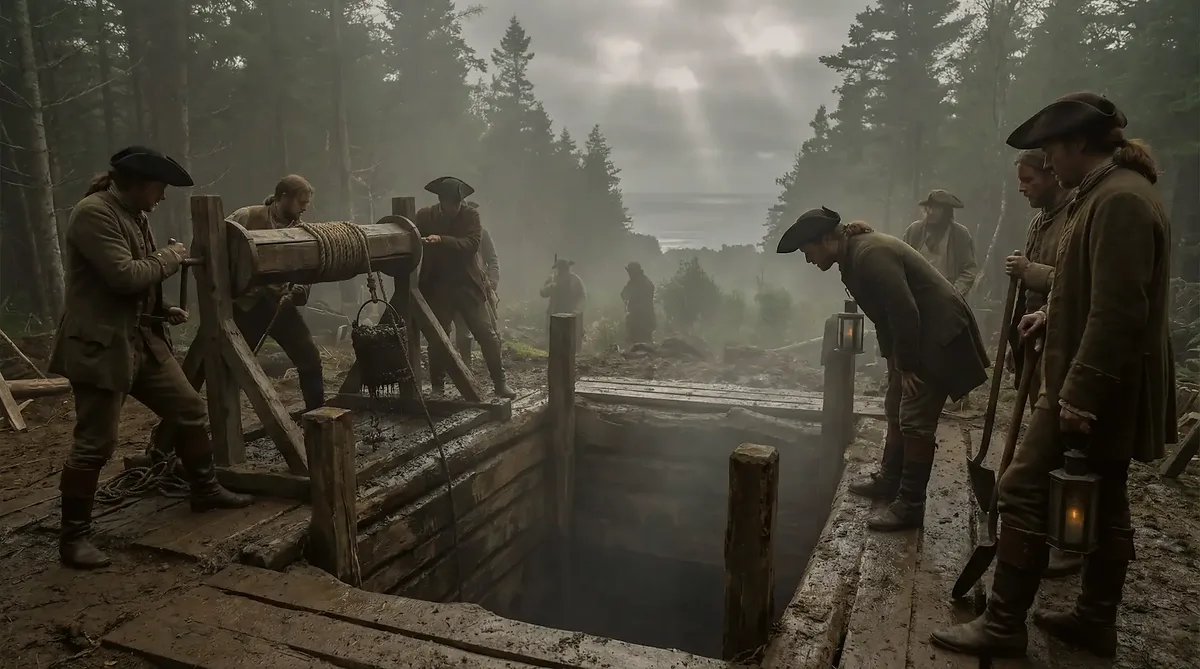
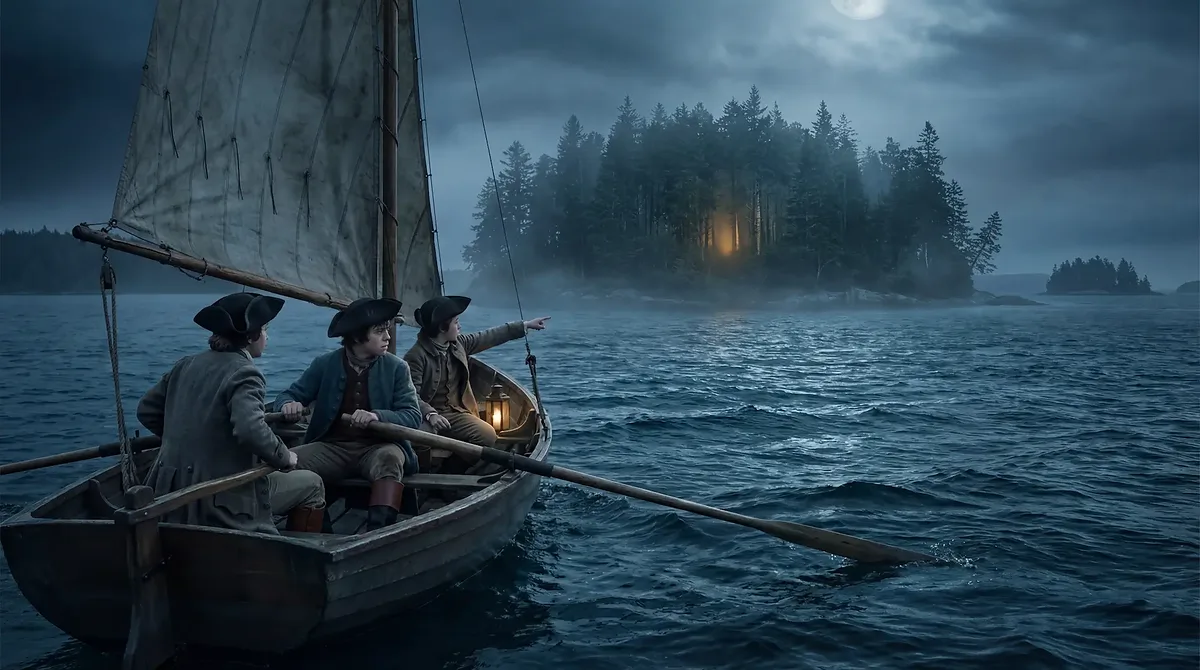
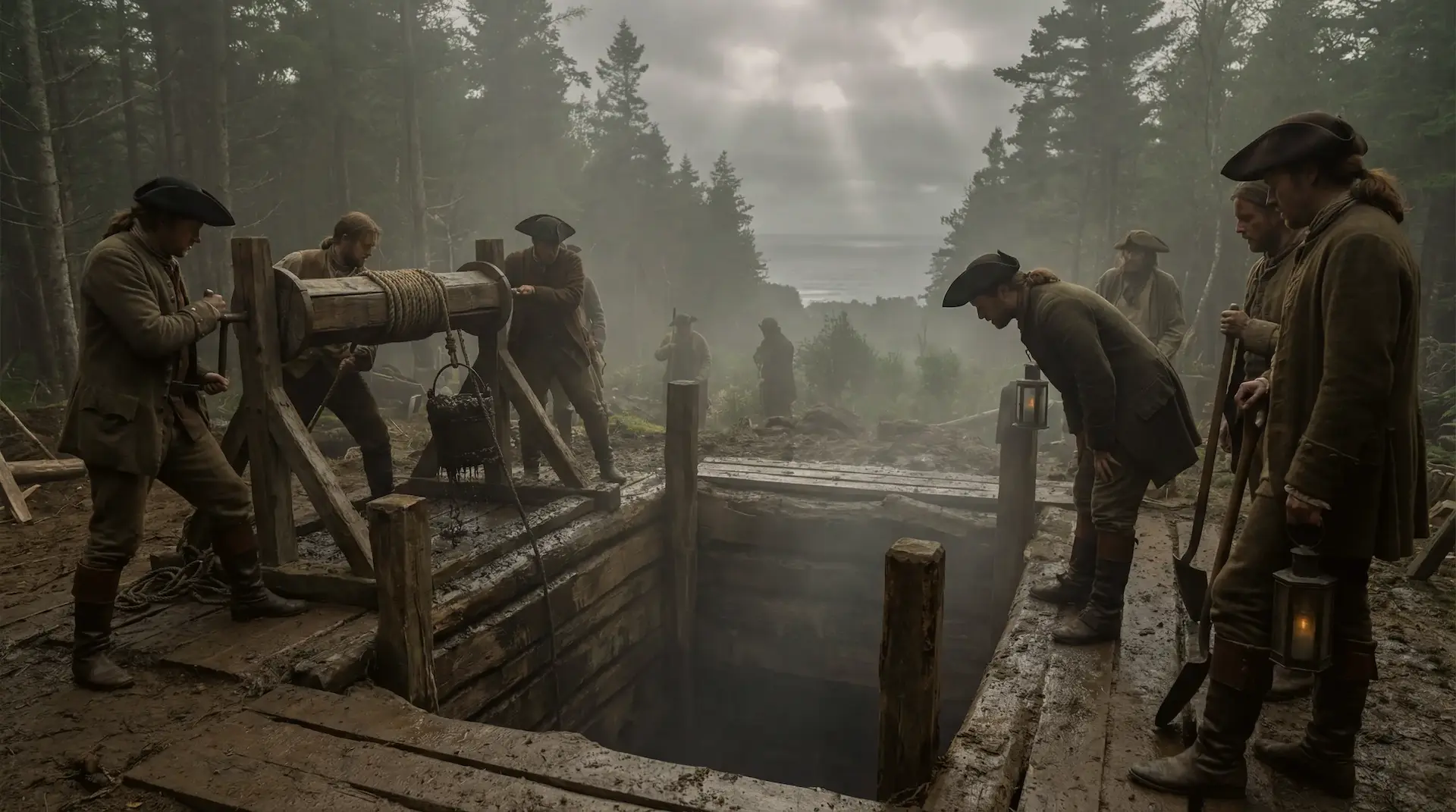
Bowdoin and his crew arrived on Oak Island on August 27, 1909. They named their headquarters Camp Kidd and inscribed a stone to that effect. The plan, on paper, had been to locate the flood tunnel and seal it before approaching the Money Pit. The plan changed at once. Captain Welling, who had been expected to guide the team to the tunnels he had worked on a decade earlier, could not locate them. Bowdoin decided to clear out the pit instead.
Work began with a sinking pump rated at sixty gallons a minute. It was insufficient. Using a bucket, the team cleared the cribbing to a depth of 107 feet, removing boulders, timber, and what Duncan G. Harris, a New York friend of Roosevelt's who followed the expedition closely, would later describe in a letter to Roosevelt as a heavy platform across the bottom of the cribbing that they were unable to remove. A diver was sent down to examine the bottom. He reported wreckage from earlier expeditions and no sign of the original chamber.
 The Oak Island Money Pit→
The Boreholes to 171 Feet
2 min
With the pit no closer to being dewatered, the team turned to drilling. The sources differ on the count. The Old Gold records list twenty-five boreholes; Randall Sullivan, working from Blair's later journals, puts the number at more than two dozen. The depths reached ranged from 155 to 171 feet, at which point the drill struck bedrock and brought up only limestone, clay, sand, and stones.
Graham Harris and Les MacPhie, the geotechnical engineers who reconstructed the drilling record in Oak Island and its Lost Treasure, give the sequence for the main hole. The drill casing was set in the shaft and drilling began at 116 feet. The bit went through seventeen feet of gravel and sand, then sixteen feet of blue clay mixed with stones and sand, recovered a six-inch length of what looked like cement at 149 feet, and then passed through eighteen feet of yellow clay and stones before stopping on bedrock at 167 feet. Twenty-seven other borings reached bedrock between 155 and 171 feet and showed similar results, including cement six to ten inches thick, but nothing that could be read as chests or a vault. There is also a report that a bright disc of metal came up in one length of core. Nothing more is known about it.
 Bright metal disc (Bowdoin drill core, 1909)→
The drilling did, however, encounter cement. At depths between 146 and 150 feet, the bit passed through layers six to ten inches thick. Harris's letter to Roosevelt of October 17, 1909, gives the most detailed contemporaneous account. The team had reached 160 feet by core drill, passing through about eight inches of cement at 150 feet, then four feet of sand, then four more inches of cement, then blue clay, then hard gravel at 160 feet. A sample of the cement was sent for analysis to a chemist named Rodman, employed by the Pennsylvania Railroad. Rodman pronounced it "undoubtedly artificial."
Not every analyst agreed. Bowdoin sent cement from the borings to Columbia University, which reported it to be natural limestone pitted by the action of water, while another report described it as rock-like material that appeared to be man-made. Harris and MacPhie suggest a reason the 1909 results differ from William Chappell's in 1897, when the drill met wood and metal it could barely penetrate. The seventeen feet of gravel at the top of Bowdoin's main hole matches the ring of washed gravel the Treasure Company had seen around the soft core of the Money Pit in 1899, which suggests his holes ran down the side of the old shaft rather than its center. The depths to bedrock he recorded agree with later drilling campaigns.
Harris observed that the cement was struck at exactly the depth Captain Welling had encountered it nine years earlier, on the occasion when Welling reported finding the small piece of parchment. The two readings of the cement, artificial according to Rodman and natural according to Columbia, have followed the Money Pit ever since.
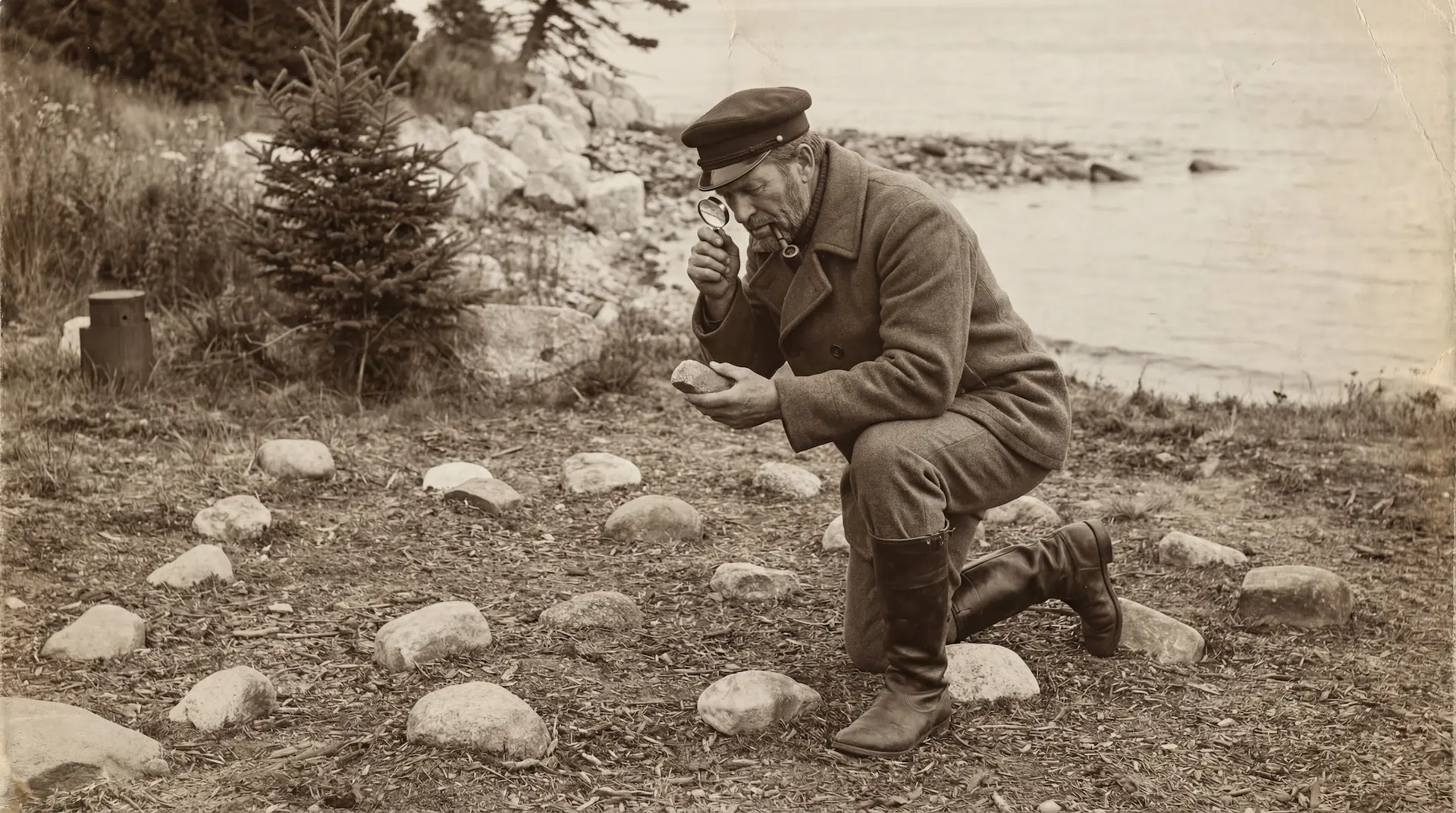 Stone Triangle, the Oak Island Sextant→
The Stone at Creighton and Marshall
1 min
At some point during the expedition Bowdoin traveled to Halifax to examine the inscribed stone that had been recovered from the Money Pit at a depth of ninety feet by the Onslow Company, organized by Simeon Lynds, in 1804. By 1909 the stone had been in the bookbindery of A. O. Creighton and Marshall on Upper Water Street in Halifax for more than forty years, used as a beating stone to flatten leather. Bowdoin described it as basalt, hard and fine-grained, and reported finding no symbols on its surface. He was skeptical that markings could have worn off a stone of that hardness in normal use. The only carving still visible to him was a set of initials, L and N, cut by an unknown hand.
 Simeon Lynds, the Oak Island Organizer→
The visit established the last documented examination of the stone by anyone now able to describe what they had seen. The bookbindery closed in 1919 and the stone disappeared. In December 2016, in Season 4, Episode 4 of The Curse of Oak Island, researchers Doug Crowell and Kel Hancock retraced Bowdoin's steps to the same Halifax building, by then occupied by the Halifax Seed Company, in an attempt to locate the stone.
The Letter from England
1 min
By November 1909 the money was gone. Bowdoin agreed with Blair that operations would resume the following summer. He sailed for England on other business and did not return. Several months later he wrote from London asking for an extension to the end of 1911, with the explanation that business abroad would prevent him from sailing earlier.
Blair was already concerned. He replied that he would consider a revised agreement only if Bowdoin could demonstrate that he had the financing in place to complete the work properly. Bowdoin's response carried what Blair read as a threat. If they could not agree, Bowdoin wrote, he would be obliged to travel to Oak Island to sell the equipment and prepare a final report. The report, which a newspaperman in his employ would publish, "would not help in getting further investments in Oak Island."
Blair replied with composure. "Your letter almost conveys a threat," he wrote, "that if we do not permit you to make further tests at Oak Island you will publish such information as would probably prevent the possibility of raising funds for exploration there in the future. Let me say that anything that can be said against Oak Island has already been written, and the publication of any article you might be able to bring forth would not in the least jar those of us who own the lease."
Solving the Mystery of Oak Island
1 min
The article appeared in Collier's on August 19, 1911, under the title "Solving the Mystery of Oak Island." It was a frontal dismissal of the entire story, organized around six declarations. M. R. Chappell, whose father William had drilled the Money Pit in 1897, preserved the six points verbatim in his unpublished 1973 manuscript The True Story of Oak Island.
There never was a pirate treasure or any other treasure in the Money Pit. A tunnel six hundred feet from Smith's Cove to the pit would have been an unnecessary labor when one of a hundred and fifty feet from the south shore would have served. The salt water did not reach the pit through a tunnel at all, but percolated through the soil from the bay on the south side. There was never a ring bolt in the beach, because it would have been easier to tie a line to an oak tree than to drill a hole in a rock. No borings ever brought up links of a chain or anything else of value, because such things do not adhere to a flat chisel or auger through a hundred and twenty feet of water. And there had never been any characters cut into the rock found in the Money Pit, only the worn initials he had seen at Creighton and Marshall.
The article closed with a line that has since been quoted in nearly every history of the search: "My experience proved to me that there is not, and never was, a buried treasure on Oak Island. The Mystery is solved."
 The Chappell Family and the Vault Beneath Oak Island→
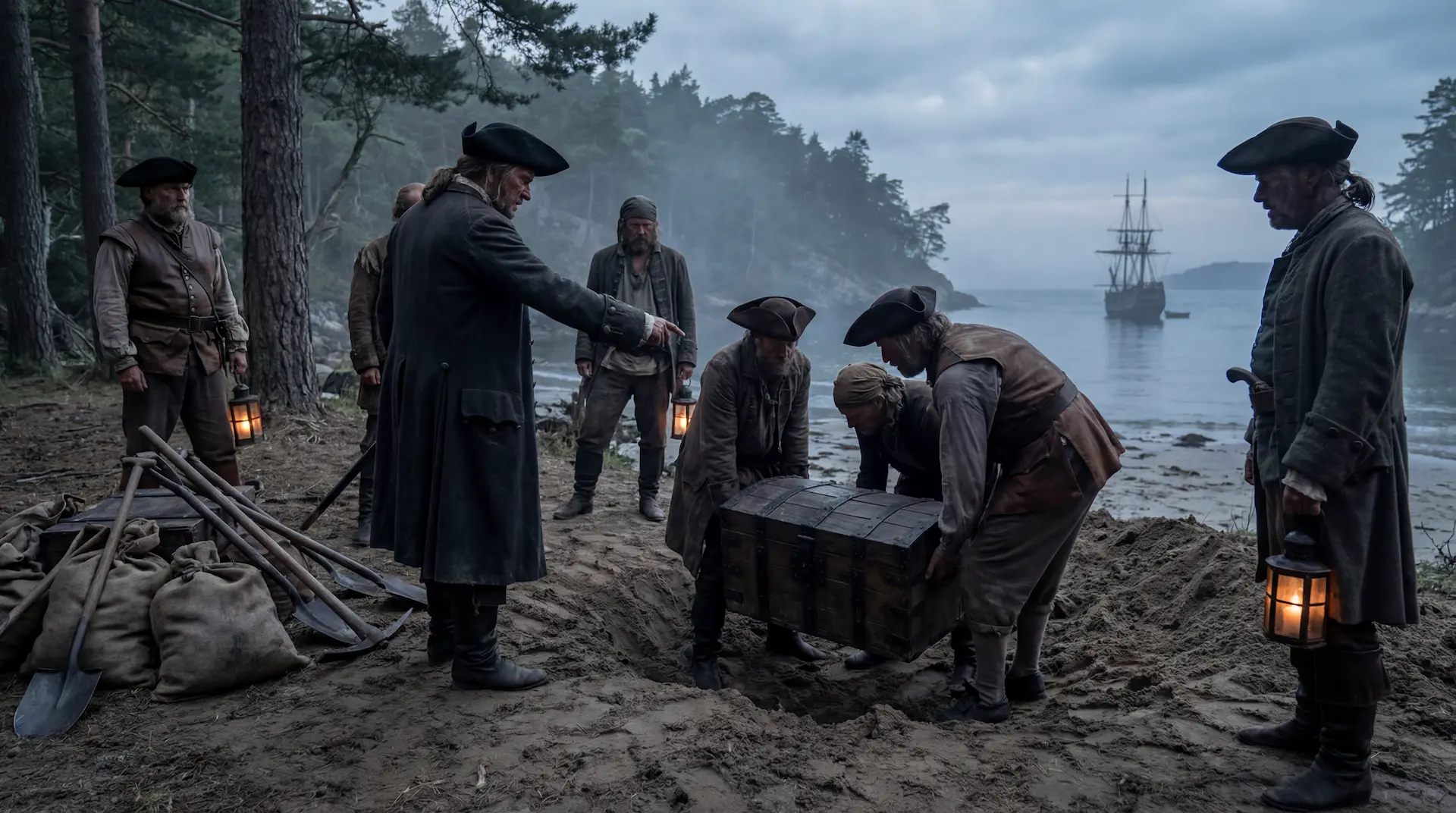 Pirates & Privateers on Oak Island→
Blair's Reply in the Amherst Daily News
1 min
On February 23, 1912, Blair answered in the Amherst Daily News. He wrote that Bowdoin had taken no advice from him or from any of the workers familiar with the operation, that he had used dynamite without good reason, and that he had ruined the cribbing so badly that his pipes and rods could only reach a small area at the bottom of the pit. He then took up Bowdoin's six points in order. The Chappell manuscript preserves Blair's rebuttal in summary form.
Only a small part of the cribbed shaft, Blair wrote, had been over the original Money Pit. Bowdoin had failed to explain the discoveries on the beach: the five artificial drains, the bored holes above high water, the effect of the dynamite charges, the air shaft, and the body of evidence for an artificial connection between Smith's Cove and the pit. When the entrance of the tunnel had been exposed, the water did not seep but poured at five hundred gallons a minute, rising and falling with the tide. Whether there had been a ring bolt was a matter of indifference. As for the chain links, Blair admitted candidly that all he had was tradition, but his experience told him such pieces could readily have come up embedded in sticky clay. As for the inscribed stone, its history was, in his view, incontrovertible and spoke for itself.
The exchange settled little. It is reasonable to say that it widened the audience. Whatever Bowdoin had intended, the Collier's piece guaranteed that the Oak Island story would be argued in print rather than quietly forgotten.
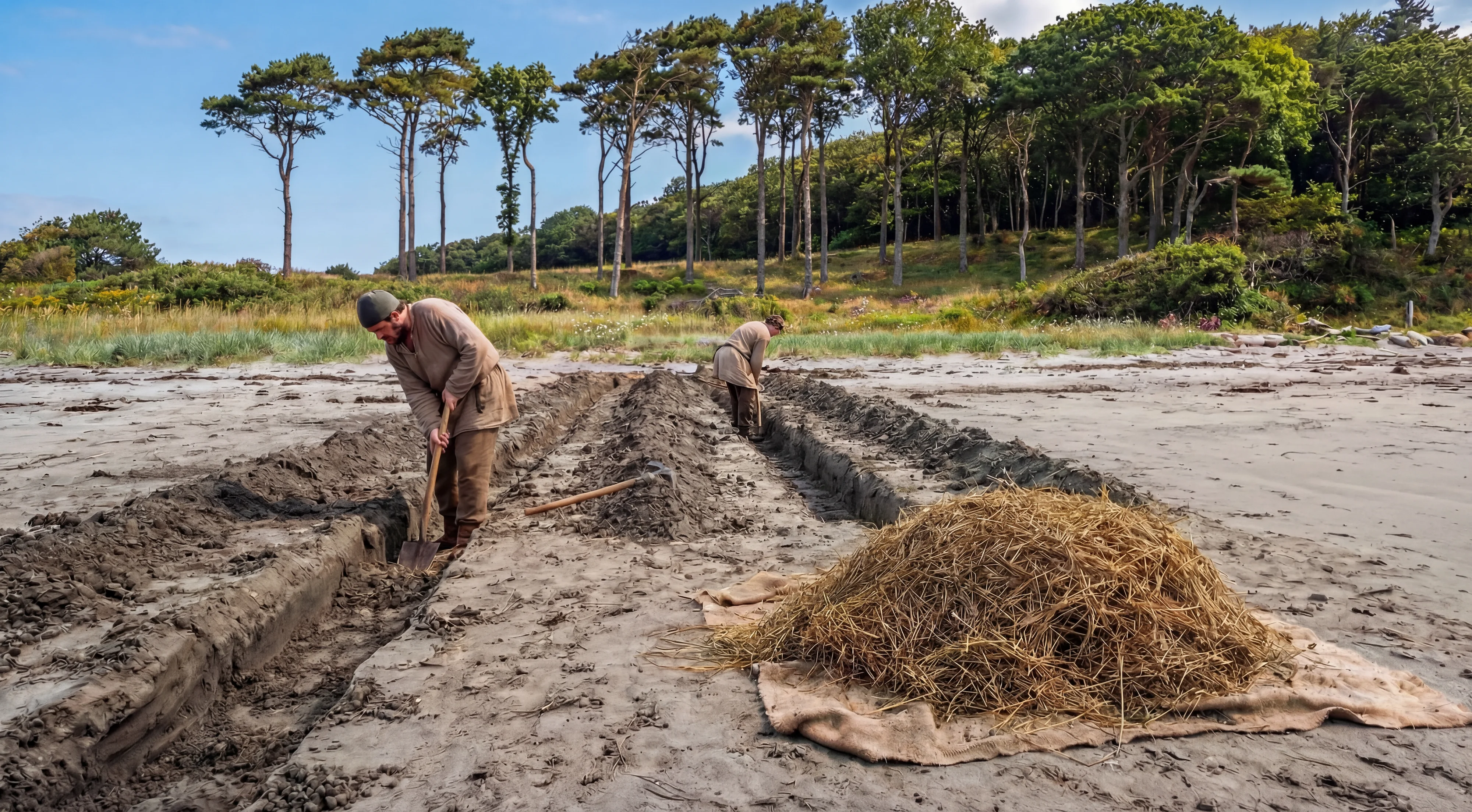 Oak Island Flood Tunnels and Box Drains: The Water Trap→
Bowdoin's 1926 Letter to Roosevelt
1 min
Bowdoin and Roosevelt did not lose touch. In November 1926, seventeen years after the Old Gold expedition had been wound up, Bowdoin wrote to Roosevelt with a new proposal: a diving operation using a specially designed suit for the recovery of treasure from sunken ships. Roosevelt forwarded the letter to his adviser Thomas A. Scott. Scott replied the next day. Roosevelt wrote back to Bowdoin within a week. The exchange is preserved in the Roosevelt presidential papers at Hyde Park Presidential Library. Whatever Roosevelt had concluded about the 1909 expedition, he had not concluded that Bowdoin's judgment was without value.
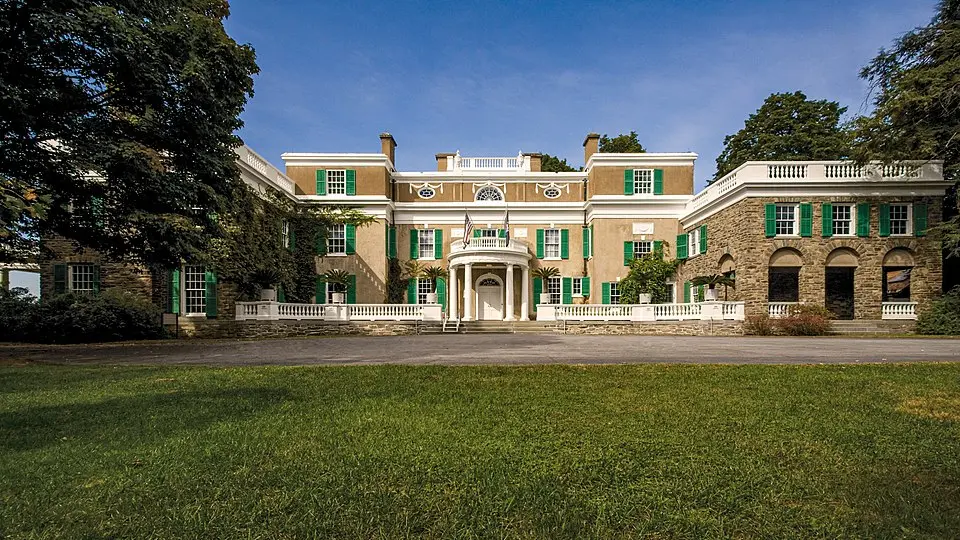 Hyde Park Roosevelt Estate→
The Cement, the Stone, and the Parchment
3 min
The Bowdoin expedition did not find the treasure and did not, on its own terms, succeed in any of its stated objectives. The flood tunnel was not located. The pit was not dewatered. The original chamber, if one survives below the wreckage of earlier searches, was not reached. Approximately eight thousand dollars was spent, of which about five thousand had been raised from the public. The Old Gold Salvage and Wrecking Company was dissolved.
The work nevertheless left a record that later searches have had to reckon with. The twenty-five or more boreholes drilled in 1909, spaced so that anything of substantial size in the area should have been struck, brought up only limestone, clay, and the layers of cement. The Rodman analysis of those cement samples as artificial is one of the more durable inheritances of the expedition, along with the Columbia verdict that contradicts it.
Bowdoin's account of the inscribed stone is the last description of it made by anyone able to handle it before it disappeared. Whether the L and N initials he saw were the worn remnants of an older inscription, later additions, or the entire original carving, no one alive can say.
The Collier's article has not aged well in some respects. His claim that the water came from the south side was partly borne out: dye tests showed a connection between the Money Pit and the sea off the South Shore, although whether it runs through a second tunnel or through natural channels in the bedrock is still argued. The tunnel from Smith's Cove that he denied had already been reached at its mouth inside the Money Pit by the Halifax Company in 1867 and again by the Treasure Company in 1897. The parchment fragment recovered in 1897, which Bowdoin called impossible, had been examined under magnifying glass by Dr. A. E. Porter of Amherst, who later declared in a sworn affidavit that it had every appearance of being parchment marked in ink. Most subsequent investigators have accepted the parchment as genuine. The three gold chain links recovered in 1849 have never been recovered or photographed and rest only in testimony, as Blair himself acknowledged.
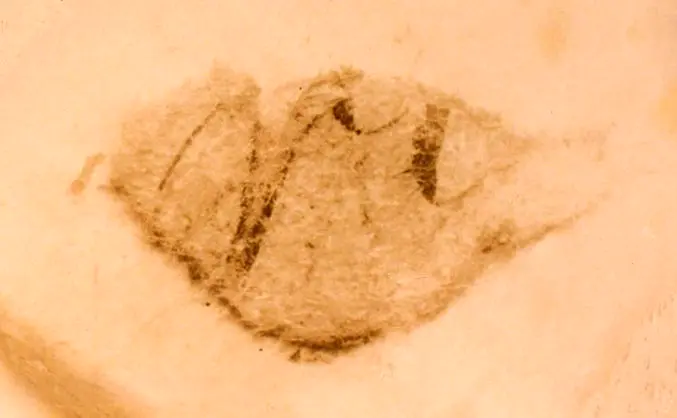 Parchment fragment→
The same year the Collier's article appeared, the geologist Rudolphe Faribault visited Oak Island while compiling the first geological report on the region. Extending the known bedrock of the mainland, he concluded that limestone, gypsum, sandstone and shale were likely to lie beneath the thick clay at the east end of the island. Later drilling proved him right, and the soluble limestone and gypsum beneath the Money Pit have been part of every serious discussion of the cement since.
What Bowdoin got right was narrower than what he claimed. The Money Pit had been worked over so thoroughly by 1909 that the original shaft was difficult to locate, the cribbing was twisted, and much of the early evidence existed only in second- and third-hand accounts. His caution about those accounts, considered in isolation, was not unreasonable. What he asserted positively, that there had never been a tunnel and there had never been a treasure and there had never been an inscription, has not survived contact with subsequent excavations.
He is best understood as the first engineer with serious credentials to apply modern methods to the Oak Island problem, fail, and leave a record that future searchers would either confirm or refute. The expedition of 1909 sits in the archive with its boreholes, its photographs, and its letters from London. It is a chapter of the search rather than a verdict on it.
Sources
1 min
Primary documents
- New York Herald, March 18, 1909, interview with Captain Henry L. Bowdoin
- New York Times, March 18, 1909, interview with Captain Henry L. Bowdoin
- New York Sun, May 1909, on the formation of the Old Gold Salvage and Wrecking Company
- Duncan G. Harris to Franklin D. Roosevelt, October 17, 1909, Franklin D. Roosevelt Presidential Library, Hyde Park, New York
- Henry L. Bowdoin to Frederick L. Blair, undated, late 1910 to early 1911 (quoted in Sullivan 2018)
- Frederick L. Blair to Henry L. Bowdoin, undated, early 1911 (quoted in Sullivan 2018)
- Henry L. Bowdoin, "Solving the Mystery of Oak Island", Collier's, August 19, 1911
- Frederick L. Blair, reply article, Amherst Daily News, February 23, 1912
- Henry L. Bowdoin to Franklin D. Roosevelt, November 1926, Franklin D. Roosevelt Presidential Library, Hyde Park, New York
- Affidavit of Dr. A. E. Porter, Edmonton, Alberta, January 11, 1926, on the 1897 parchment examination
Books and manuscripts
- M. R. Chappell, The True Story of Oak Island, unpublished manuscript, Sydney, Nova Scotia, September 1973 (copy held at Nova Scotia Archives)
- Randall Sullivan, The Curse of Oak Island: The Story of the World's Longest Treasure Hunt, Atlantic Monthly Press, 2018
- Mark Finnan, Oak Island Secrets, Formac Publishing, 1995
- Lionel and Patricia Fanthorpe, The Oak Island Mystery: The Secret of the World's Greatest Treasure Hunt, Hounslow Press, 1995
- Scott W. Clarke, Oak Island Odyssey: A Masonic Quest, Nimbus Publishing, 2023
- Graham Harris and Les MacPhie, Oak Island and Its Lost Treasure, third edition, Formac Publishing, 2013
- D'Arcy O'Connor, The Money Pit: The Story of Oak Island, Coward, McCann and Geoghegan, 1978