Visit Oak island · The Official Guided Tour of Oak Island · the Oak Island Museum & Treasure Shop
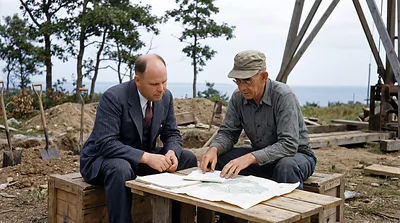
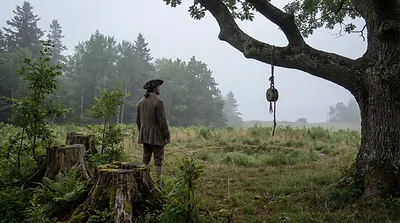
10-X at the Oak Island Money Pit (AI-assisted historical reconstruction, not a photograph)
Borehole Era III, The Machine Age Triton / Bowmaster 1969-70 On the map, position approximate 5 artifacts

10-X

Drilled 1969 to 1994 by Dan Blankenship, 235 ft

Depth235 ft
As reported by the source
Year1969 to 1994
ByDan Blankenship
WhereAbout 180 ft northeast of the Money Pit, by the door of the old Restall house

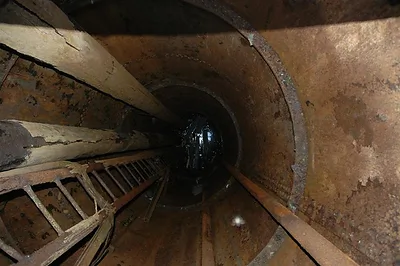
Found by dowsing. Nov 1969: 9 in rotary hole (Warnock Hersey's W10), cavities at 140 to 143 and 165 to 169, bedrock at 185, cavity 230 to 233; metal and the driller's rag blown out from about 166 to 175. 1970-71: enlarged to 27 in; wood at 167, chain, wrought iron and wire; cavity at 228 to 235; hole carried to 242 and a 20 in sump to 261 (Aug 1971). Camera and divers 1971-72. Casing collapsed at about 95 ft in Oct 1976. 8 ft steel and concrete shaft: 68 ft (1978), 126 (1980), 167 (1987), bedrock at 180 to 181 (1990). The show records the chamber at 235 ft.

Positions on the map are approximate; each dot marks the top of the hole.
What the Drill Found

  1. 0 ft
    SurfaceTop of the hole
  2. 95 ft
    Other27 in casing collapsed, nearly trapping Dan Blankenship (1976)
    H&M
  3. 95 ft
    Other27 in casing ruptured about 95 ft on 27 Oct 1976 while Blankenship was jetting at 143; the casing filled to 76 ft
    Dan Blankenship (Nov 1976)
  4. 134 ft
    OtherBone fragments and periwinkle shell (Borehole 10X sieving)
    Artifact Vault
    Bone fragments and periwinkle shell (Borehole 10X sieving) →
  5. 135 ft
    MetalSlag-like metal piece (Bowmaster dewatering hole)
    Artifact Vault
    Slag-like metal piece (Bowmaster dewatering hole) →
  6. 138 ft
    OtherVery bad smell at about 138 ft in the 8 ft shaft; walls never virgin from about 116 to 140; original 9 in hole visible 145 to 160
    Dan Blankenship (Aug 1987)
  7. 140 to 145 ft
    CavityCavity or loose soil zone in the overburden
    Borehole 10 (Nov 1969)
  8. 140 to 143 ft
    CavitySmall cavity in the overburden
    Later memos give 140 to 145.
    Dan Blankenship (Nov 1969 memo)
  9. 140 to 144 ft
    CavityApparent cavity filled with rocks, sand, gravel and sticky blue clay; cement, concrete and old wood washed out
    Dan Blankenship (Nov 1976)
  10. 151 to 161 ft
    Soil / clayObservation holes cut through the casing at 151, 153, 157 and 161: natural glacial till
    Dan Blankenship (Nov 1976)
  11. 160 to 165 ft
    CavityCavity or loose soil zone in the overburden
    Borehole 10 (Nov 1969)
  12. 165 to 169 ft
    CavitySecond cavity in the overburden
    Later memos give 160 to 165.
    Dan Blankenship (Nov 1969)
  13. 165 ft
    MetalWorked wood and metal after 10 in of wood: Swedish iron dated before 1747, wire before 1850
    Triton report, 24 Apr 1971
    Metal pieces (200 ft depth) →
  14. to 165 ft
    MetalMetal fragments from casing clean-out, estimated from about 165 ft or higher
    Depth not accurately known.
    Borehole 10 (1969)
    Metal pieces (200 ft depth) →
  15. to 165 ft
    MetalPieces of chain, folded wrought iron, chunks of cement and drawn wire from casing clean-out, from about 165 ft or higher
    Steel Company of Canada, 30 Mar 1971: chain case-hardened steel possibly before 1750; iron 'in all probability produced prior to 1750'; wire undatable
    Depth not accurately known.
    Borehole 10-X, 27 in casing (Jan-Feb 1971)
    Metal pieces (200 ft depth) →
  16. to 165 ft
    CementTwo pieces of cement, one with a flat rust-stained surface
    Canada Cement Lafarge, 14 Mar 1977: likely crude hydrated lime, not Portland cement; rust shows contact with a man-made iron object
    Borehole 10-X (1971)
    Metal pieces (200 ft depth) →
  17. 166 to 175 ft
    MetalBits of rag and small pieces of metal blown out while setting casing, with salt water
    Blankenship later concluded the metal came from about 165 ft, behind the casing.
    Dan Blankenship (Nov 1969)
    Metal pieces (200 ft depth) →
  18. 167 to 169 ft
    WoodWood struck at 167; a dishpan full at 168.5, apparently spruce; the hole bottom heaved after drilling through it
    Dan Blankenship (22 Mar 1971)
  19. 167 to 189 ft
    MetalPieces of steel chain below the wood (Blankenship: Stelco 'predates it from 1744') and more of the 1969 metal below 175
    Dan Blankenship (5 Apr 1971)
    Metal pieces (200 ft depth) →
  20. 180 to 181 ft
    Stone / rock8 ft shaft seated in bedrock at about 180 to 181 (David Tobias photographed on it, March 1990)
    Dan Blankenship (7 Mar 1990)
  21. 181 ft
    Stone / rockBedrock, about 6 ft lower than around the Money Pit
    Borehole 10 (Nov 1969)
  22. 185 ft
    Stone / rockGypsum bedrock
    Casing later seated at 181; the 1990 shaft met bedrock at 180 to 181.
    Dan Blankenship (Nov 1969)
  23. 197.5 ft
    MetalCylindrical metal object (Borehole 10, Warnock Hersey)
    Artifact Vault
    Cylindrical metal object (Borehole 10, Warnock Hersey) →
  24. 211 to 223 ft
    CavityDiver: tunnel-like openings at about 211 filled with round stones; a large cave 25 to 30 ft wide from 217 to 223
    Atlantic Divers, reported by Blankenship (Aug 1971)
  25. 212 to 235 ft
    CavityOpenings about 2 ft wide at 212 to 214; hole narrows to 22 x 27 in to 218; chamber about 10 x 15 ft below 218 with a mud floor; Can Dive divers (Aug 1972) called it a natural cavern
    Earlier divers Allan Sagar and Philip Ewing described a room 12 to 30 ft across.
    Dan Blankenship and Brice Merrill dives (Sept-Oct 1972)
    Borehole 10-X camera images →
  26. 212 to 214 ft
    CavityLarge fissure or void in the bedrock; the chamber roof now at about 212 rather than 230 after erosion
    Dan Blankenship (1988-92)
  27. 217 to 238 ft
    CavityCavity mapped by side-look sonar; Harris and MacPhie conclude it was created by the 1969 blasting and churn drilling
    Deepest figure for 10-X in this book.
    Bill Parkin sonar (1973)
    Borehole 10-X camera images →
  28. 228 to 242 ft
    CavityCavity met at 228 with sticky brown clay; caving 230 to 240; hole finished to 242 on 14 May 1971
    Dan Blankenship (1 Jun 1971)
  29. 230 to 233 ft
    CavityCavity in bedrock, 51 to 54 ft below bedrock surface
    Borehole 10 (Nov 1969)
  30. 230 ft
    OtherUnderwater TV images (Aug 1971) read by Triton as a severed hand, chests, timbers, tools and tunnels; over ten dives 1971-72 found nothing to confirm them
    Jim Knowles camera; CBC Halifax; divers incl. Phil Irwin
    Borehole 10-X camera images →
  31. 230 to 233 ft
    CavityCavity in bedrock; bit dropped from 230 to 233
    Dan Blankenship (Nov 1969)
  32. 237.5 ft
    Stone / rock3.5 in casing turned 1.5 in into bedrock at 237.5 (Warnock Hersey measurement; Bowmaster put the bottom at 234 to 235)
    Dan Blankenship (Nov 1969)
  33. 242 to 261 ft
    Other27 in hole enlarged to 242 (7 ft below the cavity floor at 235); 20 in sump carried to 261 for the pump
    Dan Blankenship (3 Aug 1971)

Rows are in depth order; the column on the left is the hole, and a figure between rows is the stretch with nothing logged. Depths as reported by each source.

Two Metal Rods and a Rotary Drill

Borehole 10-X sits about 180 feet northeast of the Money Pit, by the old Restall house. Dan Blankenship, the Florida contractor who came to Oak Island in 1965 and stayed for life, chose the spot by dowsing with two metal rods, as he stated in a sworn affidavit. David Tobias, the Montreal businessman behind Triton Alliance, later mocked "a worthless hole that he found by dowsing."

The first hole went down in November 1969 as a nine-inch rotary bore. Blankenship's reports record cavities at 140 to 143 and 165 to 169 feet, bedrock at 185, and a third cavity at 230 to 233 feet. Compressed air blew thin slivers of metal out from about 166 to 175 feet; they turned brittle within minutes. Stelco, the Steel Company of Canada, reported a primitive low-carbon steel, in all probability pre-1750.

Chain, Wire and What Dan Saw on the Screen

Triton widened the hole to 27 inches in 1970 and 1971; Parker Kennedy, a Halifax driller, carried it through bedrock to 235 feet. Wood came up at 167 feet, with chain links, wrought iron, wire, and chunks of a lime-based material that Canada Cement Lafarge judged likely to reflect human activity. Salt water carrying bird bones, shells and glass filled the hole, which Blankenship read as a flood-system link.

In August 1971 a television camera went down to the bottom cavity while Blankenship watched a monitor in a shack. He described three chests, a pickaxe, three logs, a body slumped against a wall, and a severed human hand floating before the lens. Crooker records the list and Tobias's verdict: "They could have been anything." Randall Sullivan, who saw the still photographs in 2003, wrote that the chests might have been chests and that he had to strain to see the body. The hand was never photographed.

Divers, a Collapse and Thirty Years of Concrete

Divers led by Phil Irwin, a Nova Scotia contractor, reached the cavity in 1971, a chamber about seven feet high so murky that they groped the floor and found loose stones. Blankenship dived it twice himself, the last time in 1972, and found rubble where the pumps ate at the walls.

In November 1976 (Sullivan gives the 26th, Steele and Fader the 25th) the casing folded while Blankenship hung at 145 feet; his son Dave winched him clear as the steel crushed at about 95 feet. Blankenship rebuilt the hole as an eight-foot shaft: railway tank cars to 126 feet by 1980, then, with Dan Henskee, his long-time helper, reinforced concrete to 167 feet by 1987 and bedrock by 1990. Crooker records that sonar found no tunnel to the bottom cavity, and Triton turned its money to the Money Pit.

Chatterton Stands on the Bottom

In Season 2 sonar operator Brian Abbott reported right angles, a rectangular object he called a chest, two wooden posts and a possible tunnel. In Season 3 John Chatterton, the wreck diver known for the Andrea Doria and the Britannic, squeezed past a drill bar at 204 feet and stood on the bottom. He found a metal drill pipe, not a wooden post; an angular rock where the chest had been; and sinkholes in the silt where a body had been imagined. He judged the chamber natural. In Season 4 Abbott rescanned and found the rock had moved, as Chatterton said; an airlift that season brought up hand-sawn wood coated in a tar-like substance and bone fragments.

What the Deepest Hole Leaves Open

The record supports this much: 10-X produced metal dated before 1750, with chain, wire and wood from the till above bedrock, and its bottom cavity is natural by the one direct inspection. It does not establish how those objects got 165 feet down in ground no searcher had touched. Joy Steele and Gordon Fader, the author and marine geologist who argue for an early industrial site, suggest a sinkhole trough ending near 10-X, waste from the Restall house, or water movement strong enough to crush a steel casing. Blankenship held that only a tunnel to the Money Pit could explain it. Two to three feet of silt on the chamber floor remain uncleared.


Sources

  • William S. Crooker, Oak Island Gold
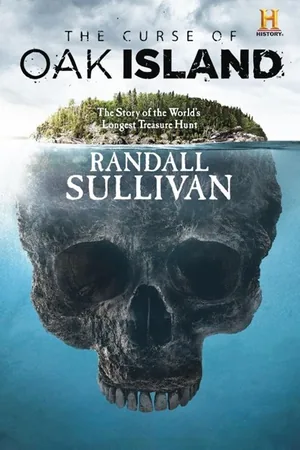
  • Randall Sullivan, The Curse of Oak Island: The Story of the World's Longest Treasure Hunt
  • Joy A. Steele and Gordon Fader, Oak Island Mystery Solved, 2nd ed. (2018)
  • Dan Blankenship, periodic reports 1965 to 1994, compiled by Les MacPhie
  • Golder Associates, Subsurface Investigation, The Oak Island Exploration (1971)

Where It Sits

Sources

  • Drilled by Dan Blankenship / Triton Alliance (drilling by W. Bowmaster, Statesman Mining, Harold Verge, Parker Kennedy)
  • Blankenship reports (1965-94) p15-23, p29-71, p89-181; Golder (1971) p9, p15, p39; MacPhie (2008) Fig. 3
  • Harris and MacPhie, Oak Island and its Lost Treasure, 3rd ed. (2013); scan p112
  • Blankenship reports (1965-94) p91
  • Artifact Vault: Borehole 10X, sieved from recovered material at about 134 ft drilling depth
  • Artifact Vault: Bowmaster dewatering hole adjacent to Hole 10, between 120 and 135 ft
  • Blankenship reports (1965-94) p143
  • Harris and MacPhie, Oak Island and its Lost Treasure, 3rd ed. (2013); scan p105
  • Blankenship reports (1965-94) p16
  • Blankenship reports (1965-94) p90-91
  • Blankenship reports (1965-94) p90
  • Blankenship reports (1965-94) p56
  • Blankenship reports (1965-94) p47
  • Blankenship reports (1965-94) p50
  • Blankenship reports (1965-94) p166-170
  • Artifact Vault: Borehole 10, Money Pit area; ejected with anhydrite core, top of core or 197.5 ft per log
  • Blankenship reports (1965-94) p63-64
  • Blankenship reports (1965-94) p66-69
  • Blankenship reports (1965-94) p160, p171
  • Harris and MacPhie, Oak Island and its Lost Treasure, 3rd ed. (2013); scan p105, p109-110
  • Blankenship reports (1965-94) p57
  • Harris and MacPhie, Oak Island and its Lost Treasure, 3rd ed. (2013); scan p108-110
  • Blankenship reports (1965-94) p16-17
  • Blankenship reports (1965-94) p60
  • Harris and MacPhie, Oak Island and its Lost Treasure, 3rd ed. (2013); scan p106
  • Harris and MacPhie, Oak Island and its Lost Treasure, 3rd ed. (2013); scan p107
  • Positions and depths: see how we know this on the Money Pit Map.