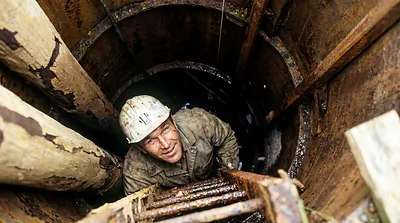
The H-8 sinkhole that formed two days earlier remains a serious concern as Rick Lagina and Craig Tester survey the damage at the Money Pit. Vanessa Lucido and Mark from Irving Equipment propose using a vibro hammer to shake the 50-inch steel caisson until the surrounding earth settles and stabilizes. The process risks triggering a larger cave-in, but the alternative is abandoning the borehole entirely. Charles Barkhouse, Danny, and the crew monitor as the vibro hammer sends loose material pouring from the shaft. Although the ground eventually stabilizes enough to proceed with other operations in the area, the team accepts that H-8 itself is too compromised to continue excavating this season.
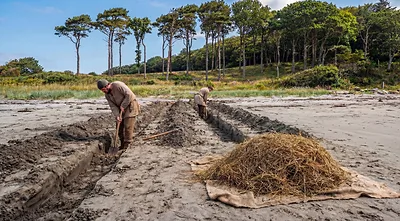
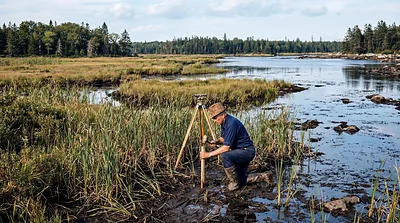
At Smith's Cove, Marty Lagina, Dave Blankenship, Jack Begley, Gary Drayton, and Billy Gerhardt cut trenches in search of additional stone box drains. Geologist Terry Matheson and the team dig to the sea horizon but find no new drains beyond the single one identified five weeks earlier. The search does turn up a large metal bucket buried in the trench. Separately, Marty, Alex Lagina, Jack, and Peter Fornetti travel 60 miles east to Lawrencetown, Nova Scotia, to meet with the Centre of Geographic Sciences. The COGS students present lidar and sonar data from their offshore survey, revealing two possible vent locations on the seafloor south of the swamp, consistent with the ice holes Dan Blankenship long believed were evidence of a second flood tunnel system. The scans also detect a triangular formation on the ocean floor whose compass bearing points toward the Money Pit.
Rick and Marty convene in the War Room with Craig, Charles, Gary, and Dave to plan a new dye test. Four years earlier, a green-dye test at borehole 10-X produced no visible results, partly because the color was difficult to spot. This time they will use fluorescent red dye pumped into borehole C-1, the shaft where Charles and Rick previously detected an underground void and a glittering gold-colored object. Using a six-inch pump at 600 gallons per minute, geologist Terry Matheson and Dan Henskee introduce the dye while three drones with high-definition cameras patrol from above. Charles and professional diver Tony Sampson search by boat off the southern shore. A dangerous moment occurs when the pump hose twists under 1,500 pounds per square inch of pressure before the crew manages to shut it down and straighten the line.
Veteran treasure hunter Dan Blankenship, age 95, visits the site during the test. He recalls his own 1988 dye test using borehole 10-X, when red dye appeared at Smith's Cove and off both the northern and southern shores over the course of three to four days. Hours into the current operation, Gary spots rust-colored water flowing from beneath the crane pad at Smith's Cove in an area that had been dry that morning. The water flow increases and deepens in color throughout the afternoon. Jack and Paul Troutman collect samples and rush them to the research center as a rainstorm approaches.
At the Oak Island Research Center, Jack and Paul test the water samples using a fluorometer capable of detecting dye at concentrations as small as one part per trillion. A reading above 1.0 would confirm the presence of dye, and the Smith's Cove sample registers a strong positive at 11.98. Rick, Doug Crowell, and Laird Niven join them to witness a retest that produces an even higher reading. The confirmation that red dye pumped into C-1 at the Money Pit traveled underground and emerged at Smith's Cove provides the strongest evidence yet of a flood tunnel connection between the two sites. Rick, invoking a lesson from Fred Nolan about duplication of results, calls for digging beneath the crane pad to trace the tunnel back to its source.