About This Artifact
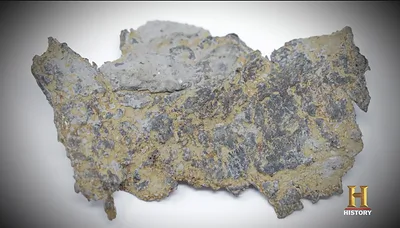
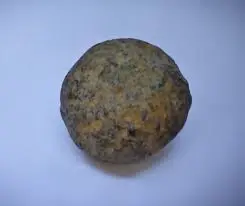
A piece of slag-like metal, approximately one inch by three quarters of an inch by one quarter of an inch, that blocked the drill bit between 120 and 135 feet during the drilling of Bowmaster's dewatering hole in late October 1970. The hole was put down adjacent to Hole 10, about ten feet from the 27-inch casing, to allow pumping closer to the excavation. Martin Pickford's report of 7 November 1970 records that the piece might be part of a casting, and that Dr. Cooke thought it resembled the portion of a cannon ball cast that forms in the filler neck of the mould and is discarded when the cast is removed. The piece passed to Dan Blankenship. Samples washed from the same hole later that month included a further piece of slag-like material, a piece of dull grey metal recorded as possibly lead or zinc and set aside for testing, assorted wood slivers of which two appeared axe-cut, Littorina sea shells, a piece of probable window glass, and plastic binding tape of the kind used to bind dynamite. No analysis of the casting piece appears in the published record.
Historical Context
Sources: Martin Pickford, Oak Island Exploration Report no. 6, November 1 to 7, 1970 (bit blockage; dimensions; Dr. Cooke's casting interpretation; sketch of the Bowmaster hole beside Hole 10); Report no. 8, November 24 to December 2, 1970, Table 1 (samples washed from Bowmaster's hole). In: "Reports by Martin Pickford for Triton Alliance and Related Correspondence, 1970 and 1971", compiled by Les MacPhie, October 2014.
Where It Was Found
Found at Bowmaster dewatering hole adjacent to Hole 10, between 120 and 135 ft. Location: the original 1795 excavation shaft on Oak Island, Nova Scotia.