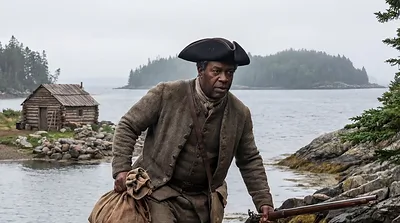
This special documentary episode chronicles the multigenerational family bonds that define the Oak Island treasure hunt. The narrative begins with the 1795 discovery by Daniel McGinnis, John Smith, and Anthony Vaughn, and the persistent legend that the three young men recovered a portion of the treasure early on. Descendants of McGinnis recall a family secret passed down through five generations: that the three discoverers found three treasure chests and each took one. The episode also examines the life of Samuel Ball, a former American slave who fought for the British during the War of Independence and settled on Oak Island in 1787. Ball accumulated nine island lots and 100 acres on the mainland, becoming one of the wealthiest men in Nova Scotia, and historian Charles Barkhouse and Ball's descendants express their conviction that his wealth came from something he found on the island rather than cabbage farming.
The story traces the involvement of the Chappell family through William Chappell's 1897 discovery of a fragment of parchment and traces of gold at 153 feet in what became known as the Chappell Vault. His son M.R. Chappell devoted his life to recovering the vault and attracted investors including Captain Henry Bowdoin and a young Franklin D. Roosevelt, who at 27 years old came to Oak Island in 1909 drawn by the theory that Marie Antoinette's lost crown jewels were buried there. David Roosevelt shares a 1938 White House letter in which FDR describes the island as a romantic spot and expresses his enduring interest in the search.
The Restall family's tragic chapter receives extended treatment. Robert Restall, a former motorcycle stunt performer, arrived on Oak Island in October 1959 with his wife Mildred and sons Lee, Bobby Jr., and Ricky, convinced he could recover the treasure within months. Bobby Jr.'s meticulous journals document years of grueling work in primitive conditions without electricity or running water. On August 17, 1965, Robert collapsed from noxious gas while inspecting a shaft at Smith's Cove. His son Bobby, along with workers Carl Graeser and 16-year-old Cyril Hiltz, died attempting to rescue him. The episode records Mildred Restall's account of learning that her husband and son were dead, and Rick Lagina promises Lee Restall that together they will finish what his father started.
The final section follows the post-Restall era through the arrivals of Robert Dunfield, Fred Nolan, David Tobias, and Dan Blankenship. Dunfield's massive 1965 excavation reached 140 feet but caved in short of the Chappell Vault. Fred Nolan's five decades of surface investigation produced Nolan's Cross and evidence of a ship buried in the swamp. Dan Blankenship's construction of shaft 10-X reached 235 feet, where a camera reportedly captured images of man-made objects and what appeared to be a body. The episode concludes with the Lagina brothers' lifelong connection to the island, beginning with 11-year-old Rick reading a 1965 Reader's Digest article to his eight-year-old brother Marty, through their failed 1990s attempt to cross the causeway and meet Dan, to their 2006 purchase of 50 percent of Oak Island Tours alongside Craig Tester. Working with Dave Blankenship, Doug Crowell, Gary Drayton, and a growing team, Rick reads aloud from a time capsule letter that describes the treasure hunt as a story about family above all else.