About This Material
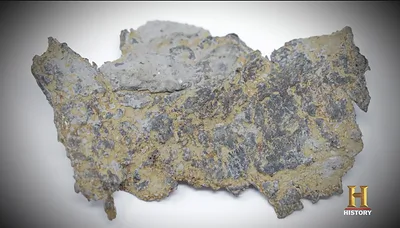
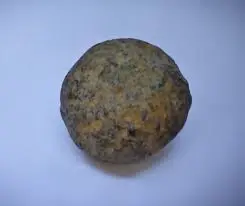
Fragments of what appeared to be crude lime mortar recovered from Becker Hole B33 during the 1967 drilling program in the Money Pit area. The hole, located seven feet south of Hole B24, reached rock surface at 152 feet and was advanced through rock to 190 feet with a tricone bit. Clay was found from 190 to 192 feet, followed by a layer of wood at 192 feet. The hole then passed through a partial cavity containing soil and the mortar fragments before encountering rock again at 198 feet. In Oak Island usage this material has commonly been referred to as cement, a label that goes back to the cement layer reported by drillers in the Money Pit in 1897. Les MacPhie's 2008 technical review lists the mortar among the artifacts considered evidence of man-made workings in the lower reaches of the Money Pit, found in association with the deep wood, the puddled clay layer, and the cavity sequence recorded in the surrounding holes. No compositional analysis or dating of the fragments appears in the published record.
Historical Context
Sources: Les MacPhie, "The Money Pit, Oak Island, Nova Scotia: Summary of Geotechnical and Archaeological Conditions and the 1967 Becker Drilling Results", technical report, Montreal, January 2008 (Hole B33 description; Section 5.6 Artifacts). Becker Drilling (Alberta) Limited, 1967 drilling program, as recorded by Dan Blankenship.
Where It Was Found
Found at Becker Hole B33, partial cavity below 192 ft, Money Pit area. Location: the original 1795 excavation shaft on Oak Island, Nova Scotia.