About This Material
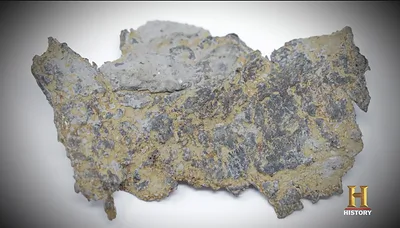
Small slivers of wood recovered from washed drill cuttings during the deepening of Hole 201X in the winter of 1971. Hole 201X was a Triton Alliance churn-drill hole beside Golder Hole 201, which lies 97 feet north-northeast of Hole 10 in the Money Pit area. Geologist Martin Pickford, supervising the drilling for Triton, reported in late January 1971 that all cuttings from the hole were washed and only a few slivers were recovered, two of which appeared to have been cut with an axe. He noted there was not enough wood to warrant dating by the carbon 14 method. A batch recovered the previous week prompted Pickford to weigh two readings, wood buried at the time of glaciation or wood emplaced later, observing that the slivers were small and not very diagnostic. Dan Blankenship retained the recovered material. If the axe interpretation is correct, the slivers are human-worked wood from depth in ground beside the Money Pit workings, but no dating or species identification appears in the published record.
Historical Context
Sources: Martin Pickford, Oak Island Exploration weekly report, January 25 to 31, 1971 (axe-cut slivers; insufficient wood for carbon dating); Pickford weekly report for the preceding week (slivers from Hole 201X retained by Blankenship). In: "Reports by Martin Pickford for Triton Alliance and Related Correspondence, 1970 and 1971", compiled by Les MacPhie, October 2014.
Where It Was Found
Found at Hole 201X, washed from drill cuttings; hole reached bedrock at about 170 ft. Location: the original 1795 excavation shaft on Oak Island, Nova Scotia.