For most of its history, Oak Island was difficult to visit and easy to ignore. The island was privately owned, access was restricted, and the nearest town, Chester, had no particular reason to advertise the place. A small exhibit at the Chester Train Station, maintained by the Chester Municipal Heritage Society, told the story of the Money Pit for anyone who happened to ask. Once a year, on what locals called Old Island Days, the public was invited to walk the island and hear the legend from whoever was willing to tell it. A few hundred people would show up. That was the extent of Oak Island tourism.
Then, on January 5, 2014, the History Channel premiered The Curse of Oak Island.
The Television Effect
1 min
The show changed everything, and it changed quickly. Within its first two seasons, The Curse of Oak Island became the highest-rated program on the History Channel, regularly drawing more than five million viewers per episode in the United States alone. The audience was global. Fans in Europe, Australia, and South America followed the Lagina brothers' search with the kind of devotion usually reserved for sports teams or serialised fiction. And a significant number of those fans wanted to see the island for themselves.
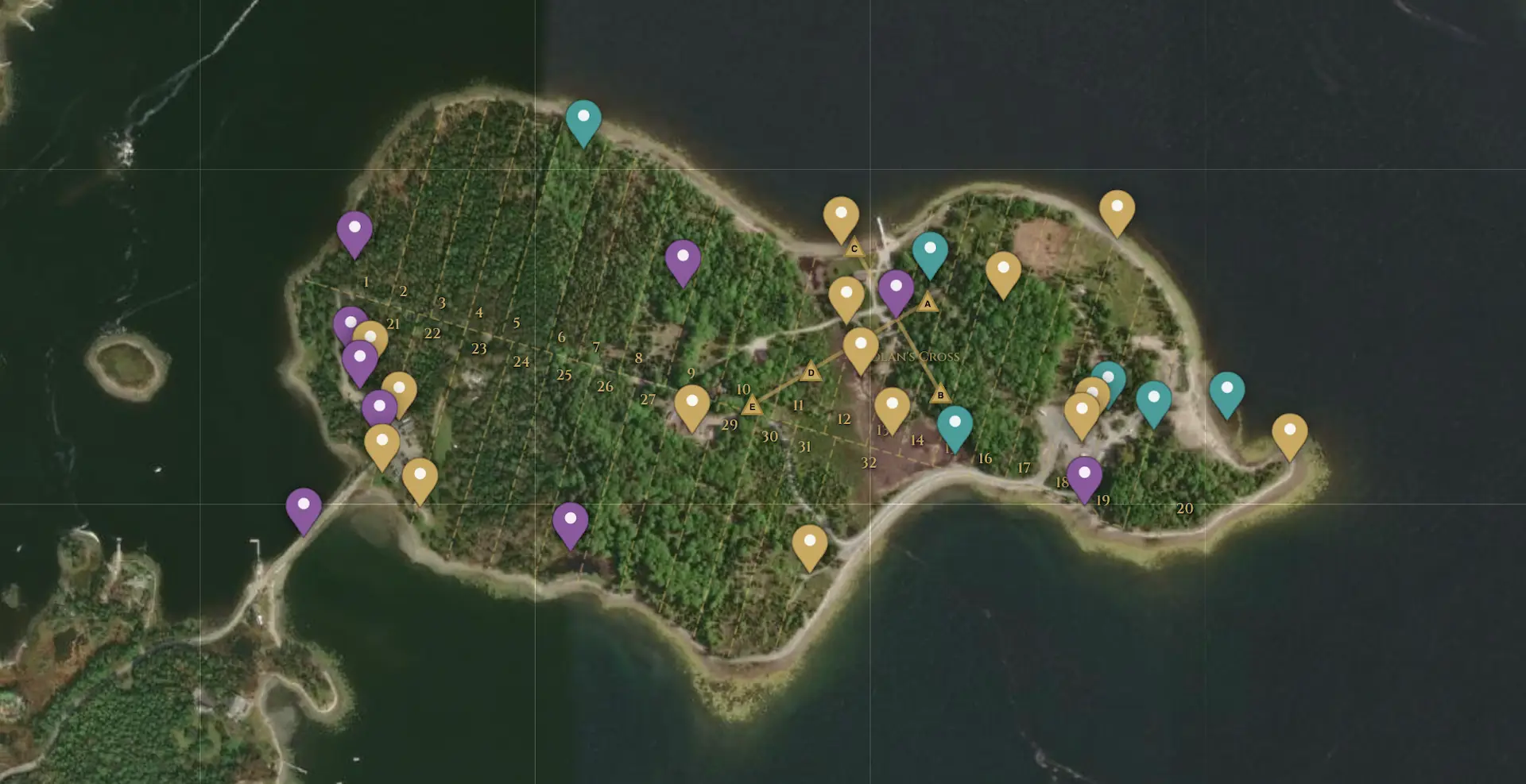
Oak Island Tours Inc., the company through which Rick and Marty Lagina hold their stake in the island, began offering guided tram tours. The format was simple: a two-hour ride along Centre Road, past the Money Pit area, Smith's Cove, and the swamp, narrated by someone who knew the ground. Charles Barkhouse, the island's historian and a cast member on the show, became the most recognisable guide. Danny Hennigar, a local historian with decades of experience in the area, led off-island excursions that took in graveyards, heritage sites, and locations connected to the treasure hunt's long history.
Demand overwhelmed supply almost immediately. The annual allocation of approximately 10,000 tour tickets, released online in a single batch, reportedly sold out in under three minutes. Visitors who missed the window had no way onto the island. Oak Island is private property, and there is no public access beyond the causeway.
The Ecosystem
2 min
What grew around the island was larger than the tours themselves. An entire economy took shape on the South Shore of Nova Scotia, built on the simple fact that people wanted to be near Oak Island even if they could not set foot on it.
The Oak Island Resort and Conference Centre, located on the mainland directly across from the island, rebranded around the connection. Guests could wake up with a view of the island, eat at the Oak and Oar Eatery, and book packages that combined accommodation with guided tours and boat trips. The resort offered experiences fronted by cast members, including Tony Sampson, a local dive master who appears regularly on the show and who led visitors through the Interpretive Centre on the island itself.
Salty Dog Sea Tours began running narrated boat trips from the Oak Island Marina, circling the island by water and pointing out the key locations visible from the shore: the Money Pit area, Smith's Cove, the crane, the swamp. For visitors who could not get tour tickets, or who arrived during the off-season, the boat became the next best option.
Private tour operators in Halifax, an hour's drive to the northeast, added Oak Island to their itineraries. Companies offered full-day excursions that combined the drive along the coast with stops in Mahone Bay and Lunenburg, two towns already established on the tourism circuit. Oak Island gave them a new anchor attraction, one with international name recognition and a built-in audience that needed no convincing.
The Oak Island Treasure Shop opened on Highway 3, off the island itself, selling branded merchandise, books, apparel, and souvenirs. It became the only place to purchase official Curse of Oak Island merchandise directly from the island's owners, and it operates year-round.
Bed and breakfasts in the Chester area, once quiet outside the summer sailing season, reported being booked months in advance. Restaurants along the South Shore saw trade from visitors who had driven down from Halifax specifically to see the island. The ripple effect reached businesses that had no direct connection to the treasure hunt at all.
Tourism Nova Scotia
1 min
The provincial government recognised the opportunity early. Tourism Nova Scotia, the agency responsible for marketing the province as a travel destination, incorporated Oak Island into its promotional campaigns alongside established draws like Peggy's Cove, the Cabot Trail, and the Lunenburg waterfront. The agency's website features a dedicated Oak Island section with links to tours, nearby attractions, dining, and accommodation. The messaging positions the island as part of a broader South Shore itinerary rather than a standalone destination, encouraging visitors to spend time (and money) across the region.
The province also has a direct financial interest in the show's production. Nova Scotia Business Inc., through its Film and Television Production Incentive Fund, has provided millions of dollars in production incentives to The Curse of Oak Island across multiple seasons. The fund operates as a rebate on eligible local spending: labour, equipment, and services purchased from Nova Scotian suppliers. The more the production spends locally, the larger the rebate. By Season 9, eligible Nova Scotia expenditure on the show had reached approximately CA$13 million per season. The arrangement benefits both parties. The production gets a meaningful cost reduction, and the province gets the economic activity that comes with a major television production operating on its soil for months at a time, year after year.
The Closure Years
1 min
In 2020, the COVID-19 pandemic shut down tourism across Nova Scotia, and Oak Island was no exception. The tours stopped. The Interpretive Centre on the island closed its doors. What no one anticipated was how long the closure would last.
Even as pandemic restrictions eased across the province, Oak Island remained closed to the public. The island is an active filming location and excavation site, and the logistics of running a television production alongside a tourism operation on 140 acres proved difficult to reconcile. Filming schedules, heavy equipment, and the simple reality of ongoing excavation work meant that public access could not easily resume. The island stayed closed through 2021, 2022, 2023, 2024, and into 2025.
Tour operators adapted as best they could. Private guides from Halifax continued to bring visitors to the South Shore, adjusting their itineraries to include a drive across the causeway (or as close to it as permitted), a stop at the Treasure Shop, a boat tour around the island, and visits to Chester and the surrounding area. The experience was not the same as walking the ground, but the demand was still there. People continued to come.
OIARO and the Future
1 min
In anticipation of the island's eventual reopening, the Oak Island Archives and Research Organization (OIARO), a registered Nova Scotia society, partnered with Cerca Trova Ltd., the majority owners of the island, to manage visitor access going forward. The partnership represents a more structured approach to tourism than the earlier model, which had been largely run through Oak Island Tours Inc. As of early 2026, the Interpretive Centre was expected to reopen, though the format and scale of future tours had not yet been confirmed.
The new model will face the same tension that has defined Oak Island tourism from the beginning. The island is simultaneously one of Nova Scotia's most sought-after tourist destinations and an active archaeological and excavation site. Visitors want to see the Money Pit, the swamp, and Smith's Cove. The team needs those areas clear to work. The island is small, the season is short, and the demand far exceeds what 140 acres can absorb without interfering with the search.
A Quiet Corner of Nova Scotia
1 min
Before 2014, the South Shore of Nova Scotia was known for Lunenburg, a UNESCO World Heritage Site, and for Mahone Bay, a scenic harbour town popular with sailors and day-trippers. Chester was a summer colony for Halifax families, pleasant but unremarkable on the international stage. Oak Island was a footnote, known to treasure enthusiasts and virtually no one else.
The television series changed that calculus entirely. A privately owned island with no public facilities, no restaurant, no hotel, and no gift shop became one of the most requested tourist destinations in the province. The infrastructure that grew around it (the resort, the boat tours, the merchandise shop, the Halifax day-trip operators) exists entirely because of a television audience that wanted to see the place where the mystery lives.
Whether the treasure is ever found may matter less, economically, than whether the show continues to air. The search has run for over two centuries without a definitive answer, and the island has thrived on the question. For the South Shore of Nova Scotia, the curse of Oak Island has turned out to be something closer to a gift.