On the morning of 28 January 1671, the city of Panama burned. A force of roughly fourteen hundred buccaneers under the command of Henry Morgan, a Welsh privateer from Llanrhymney in Glamorgan, had crossed the Isthmus of Panama through eight days of jungle, ambush, and near-starvation to reach the wealthiest Spanish city on the Pacific coast. By nightfall the city was theirs. By the time Morgan marched his men back across the isthmus several weeks later, he had completed the largest buccaneer operation in the history of Caribbean piracy. The treasure he carried away has never been fully reconciled with the wealth Panama was known to contain. Three centuries later, that gap is the engine of every Henry Morgan theory of Oak Island.
Morgan is the pirate-era candidate with the political cover, the personal force, and the documented missing fortune to fit the Oak Island picture. He was knighted by King Charles II. He served as Lieutenant Governor of Jamaica. He died with three plantations to his name and was buried with a twenty-two gun salute from ships at anchor in Port Royal harbour. He is also the pirate whose name was put forward in print, in a Nova Scotia newspaper of record, as the man who hid treasure on Oak Island. The editorial appeared in the Halifax Journal in 1932, in support of Frederick Blair's renewed syndicate. It named Morgan, and it named the Panama raid as the source of the buried wealth.
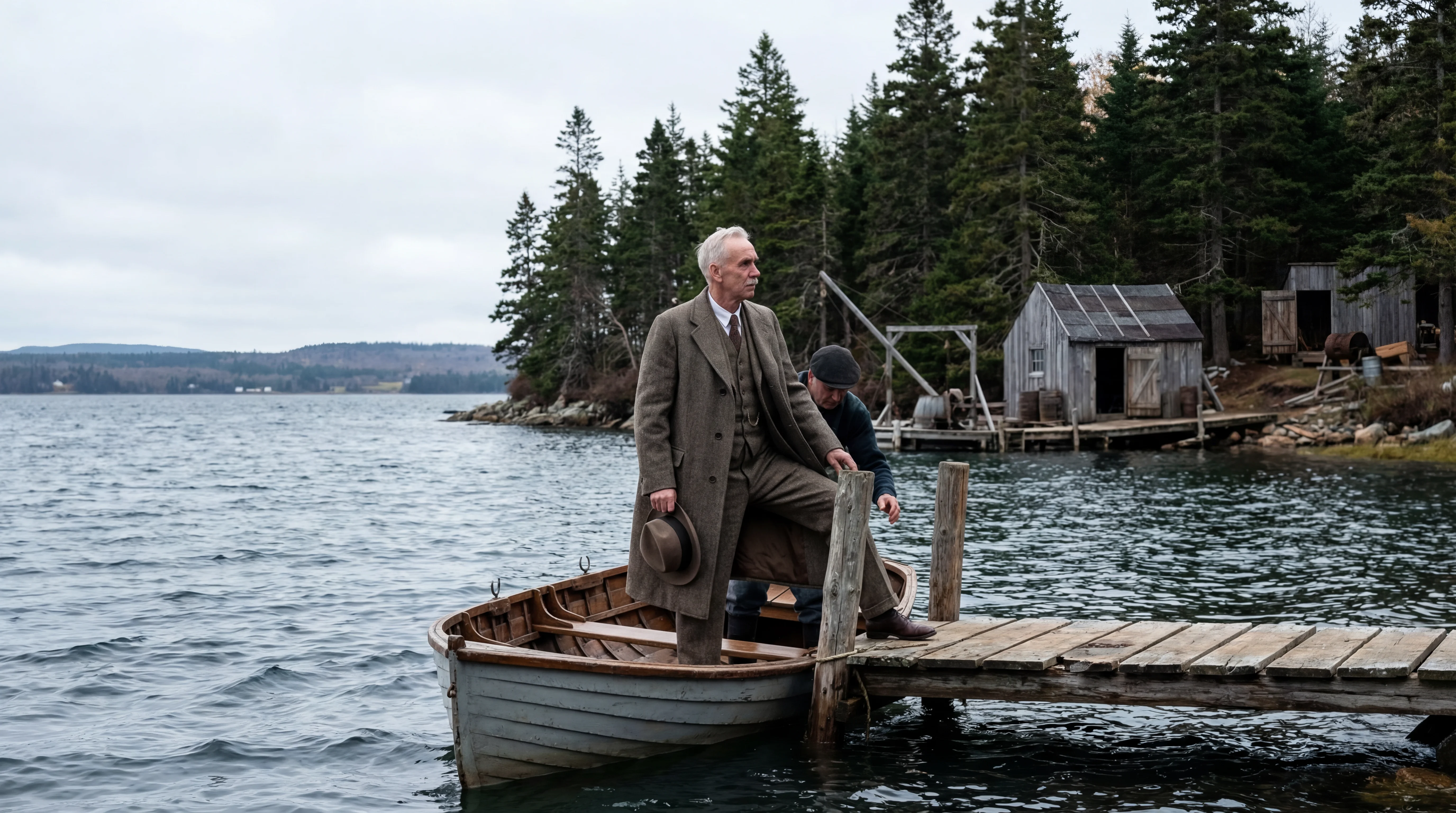 Frederick Blair: The Man Who Held Oak Island for Sixty Years→
The Sack of Panama, January 1671
2 min
The expedition that took Panama was the largest of Morgan's career and the largest assembled by any buccaneer captain in the seventeenth century. In late 1670 Morgan, holding a privateer commission from the Governor of Jamaica, Sir Thomas Modyford, summoned the Brethren of the Coast to the rendezvous at Cape Tiburon on the western tip of Hispaniola. By December he commanded thirty-eight ships and a force estimated by Alexandre Olivier Exquemelin, who sailed with the expedition as a ship's surgeon, at around two thousand men. Other contemporary estimates ran lower. The modern consensus, drawing on the muster records reconstructed by Peter Earle in his 1981 study, places the landing force at roughly fourteen hundred.
On 20 December 1670 Morgan stormed the fortress of San Lorenzo at the mouth of the Chagres River on the Caribbean side of the isthmus, opening the inland passage. He left a garrison at San Lorenzo, transferred his men to canoes and shallow-draft boats, and on 9 January 1671 began the march upriver and across the isthmus. The crossing took eight days. Spanish forces under the President of Panama, Don Juan Pérez de Guzmán, launched repeated ambushes from the forest. Morgan's men exhausted their provisions and were reduced to eating leather. By the time the buccaneers emerged onto the savannah outside the city, they had been on short rations for the better part of a week and were in no mood for negotiation.
The battle outside Panama on 28 January was decisive. Pérez de Guzmán had assembled a defending force that outnumbered the attackers, including cavalry and a herd of cattle the Spanish hoped to stampede into the buccaneer ranks. The cattle ploy failed and turned back upon the defenders. Morgan's musketeers and French allies broke the Spanish infantry on open ground. The Spanish cavalry was destroyed in a single charge. By afternoon the buccaneers were in the city.
What followed has been debated since 1671. Panama burned to the ground. Exquemelin attributed the fire to Morgan; later Spanish accounts also held him responsible. Morgan's own account, given before the English Privy Council in 1672, blamed Pérez de Guzmán for setting the city alight to deny his enemies its stores. The destruction was total. Panamá Viejo, the original site, was abandoned. The new city of Panama, founded several miles to the west two years later, stands on different ground entirely.
The Missing Treasure
3 min
The accounting problem is the part of the Panama story that keeps the Henry Morgan theories of Oak Island alive. The wealth concentrated in Panama in January 1671 was immense. The city was the receiving point for the silver of Peru, the gold of New Granada, and the goods carried up from Lima by the annual Pacific flota. Spanish records cited in Stephan Talty's 2007 biography give the population at around six thousand and the warehouses as among the richest on the Pacific rim.
Three documented losses ran against Morgan's haul before he ever entered the city. Two galleons sailed from Panama Bay during the days before the buccaneers arrived, carrying the church plate, royal silver, and the principal merchants' wealth out into the Pacific. Morgan dispatched a captured barque to chase them. The pursuit failed. Mule trains had been moving inland toward the safety of Veragua and the road to Mexico City throughout the previous week. Pérez de Guzmán's order to burn the warehouses, if it was his order, took further wealth out of reach. By the time Morgan's men were sifting through the smoking ruins, a substantial part of Panama's portable treasure was either at sea, on the back of a mule, or melted into the rubble.
What remained was still considerable. Exquemelin recorded the haul as 400,000 pieces of eight in coin, plate, and merchandise, plus prisoners held for ransom. The modern biographers Earle and Talty give converted values in the tens of millions of pounds in current terms, with the upper estimates running well over a hundred million when the full inventory of plate, jewellery, and ransom is included. The buccaneers spent four weeks in the ruined city collecting what they could, interrogating prisoners about hidden caches, and gathering captives for the march back.
The accounting collapsed on the return. When Morgan distributed shares at Chagres in late February 1671, his men complained openly that their portions were too small. Exquemelin gives the figure as around two hundred pieces of eight per ordinary buccaneer, against expectations several times higher. The complaints were loud enough that contemporary observers, including Exquemelin and the French chronicler Charles de Rochefort, accused Morgan of having weighted the lead in the scales used to measure the share-out, and of having loaded a private cargo aboard his flagship that was never declared. The accusation was repeated in print in Exquemelin's De Americaensche Zee-Roovers, published at Amsterdam in 1678. When the English translation appeared in 1684, Morgan sued the London publisher for libel and won damages of two hundred pounds. The libel ruling did not address the underlying accounting question. It addressed the description of him as a pirate, which by 1684 he was not.
Morgan slipped his anchorage at Chagres in early March 1671 without giving formal notice to the rest of the fleet. He sailed alone for Port Royal with a small group of trusted captains. The remaining buccaneers were left to make their own way home. The departure has been read in two ways. Charles Leslie's 1739 history of Jamaica described it as a prudent escape from a mutiny that was forming over the contested shares. Earle and Talty both treat it as consistent with Morgan having more aboard than he had declared.
His estate at death, inventoried in Jamaica in 1688, came to five thousand two hundred and sixty-three pounds in money and goods, three working plantations, and one hundred and twenty-nine enslaved Africans. The sum is substantial for a colonial governor of the period. It does not approach the Panama treasure, even allowing for years of expense and the maintenance of a public household. The gap between the wealth that left Panama and the wealth that surfaced in Jamaica has never been closed.
From Buccaneer to Lieutenant Governor
2 min
Morgan's career after Panama is the unusual part of the story, and the part that gives the Oak Island theory its political plausibility. Six months before the raid, on 8 July 1670, England and Spain had signed the Treaty of Madrid in which each crown undertook to suppress private war against the other in the Americas. The treaty arrived in the Caribbean after Morgan's fleet had sailed. News of it reached Jamaica only in 1671. By the time the English government understood that the Panama raid had taken place under a commission issued in defiance of an existing treaty, the buccaneers were already at Chagres dividing their shares.
The Spanish ambassador in London, Conde de Molina, lodged formal protests. King Charles II was obliged to act. In April 1672 Sir Thomas Modyford was recalled to England under arrest. In August 1672 Morgan himself sailed for England aboard HMS Welcome, not as a prisoner exactly, but under the cloud of the Spanish complaint. He arrived in London a celebrity.
What followed was a public performance. Morgan was never tried. He was lodged at the home of his cousin Sir Charles Morgan, then received at court, then taken up by the Duke of Albemarle and the Earl of Carbery. His knowledge of the Spanish Caribbean and the disposition of its defences was of immediate interest to a Crown preparing for the next round of imperial competition. By late 1673 he was advising on Caribbean policy. On 23 November 1674 he was knighted by Charles II. In January 1675 he sailed back to Jamaica as Lieutenant Governor of the colony.
The inversion that followed has no exact parallel in the history of piracy. Morgan, now Sir Henry, sat as a justice of the Vice-Admiralty Court in Port Royal and presided over the prosecution of his former colleagues. Buccaneers who came in under the periodic amnesties were welcomed. Those who did not, and were caught, were hanged. He held the deputy governorship under three successive governors, retaining the post through the 1680s. He was dismissed in 1683 after persistent reports of drinking and of failing to suppress unlicensed buccaneer activity, but he remained on the Jamaica Council and continued to advise the government until his death.
This is the trajectory that creates the political cover for an Oak Island theory. From 1672 until his death sixteen years later, Morgan was a Crown servant, a knighted public official, and a man with documented authority over Caribbean shipping. A discreet transfer of bullion aboard a chartered or commanded vessel would have left no trace in the public record. Crown officials of his standing routinely moved private cargo on Crown bottoms throughout the period. Nothing about his position required him to account for what he had carried out of Panama beyond what he had already declared.
The Brethren of the Coast
6 min
The Brethren of the Coast were the loose buccaneer confederation that operated out of Tortuga, Port Royal, and after 1670 increasingly out of Petit-Goâve on the south coast of Hispaniola. The historian David Marley, in his 2010 Pirates of the Americas, describes the Brethren less as an organisation than as a working coalition of captains, French, English, Dutch, and a smaller number of Portuguese and Danish, who pooled crews, signed common articles for individual expeditions, and recognised a rotating set of senior commanders. Morgan was a senior figure within the coalition from the mid-1660s until his elevation to the deputy governorship in 1675.
The Brethren held periodic general gatherings. The best-documented of these is the assembly at Roatán in the Bay Islands off the coast of Honduras in early 1683, reconstructed from Spanish colonial correspondence of the period by David Marley in Historic Cities of the Americas (2005) and summarised in Angus Konstam's 2007 Pirates: An Illustrated History. The captains present at Roatán included Laurens de Graaf, the Dutch buccaneer who would lead the May 1683 raid on Veracruz; Nicholas van Hoorn; Michel de Grammont; Michiel Andrieszoon; and the Dutch buccaneer Jan Willems, better known by his nickname Yankey.
Yankey Willems sailed in the mid-1680s with his fellow Dutch captain Jacob Evertson, and their joint operations carried the Brethren network into the northern colonial seaboard. The August 1688 letter from Captain Francis Nicholson, the lieutenant governor of New York, to Thomas Povey, an administrative agent for King James II, preserved in volume three of John Romeyn Brodhead's 1853 Documents Relative to the Colonial History of the State of New York, records the arrest of eight men who were the remnant of "Yankey's and Jacob's company." The letter places Willems's crew at Martha's Vineyard in the summer of 1688, trading hides and elephant teeth from a Caribbean prize to Captain Andrew Belcher, master of the Boston ship Swan. One of the prize ships, the letter records, was taken on to "Port-la-Bare in Nova Scotia." The exact location of Port-la-Bare has not been recovered, but the phrasing places at least one Brethren of the Coast prize vessel in Nova Scotia waters in the summer of 1688, the same summer Morgan lay dying in Jamaica.
 Yankey Willems: Brethren of the Coast and Oak Island→
The 1688 record matters for the Morgan question in two ways. It establishes that the Brethren network, of which Morgan had been a senior figure, reached the New England and Nova Scotia coast in operational practice as well as in theory. And it places a Brethren-affiliated cargo in Nova Scotia in the year of Morgan's death, with one of New England's most prominent merchants, Andrew Belcher, in the role of receiving fence. Belcher was the grandfather of Jonathan Belcher Jr., the Nova Scotia Chief Justice and Grand Master of Freemasons whose family later owned lots adjoining Oak Island. The thread is circumstantial. It is also documented, and it runs in the right direction.
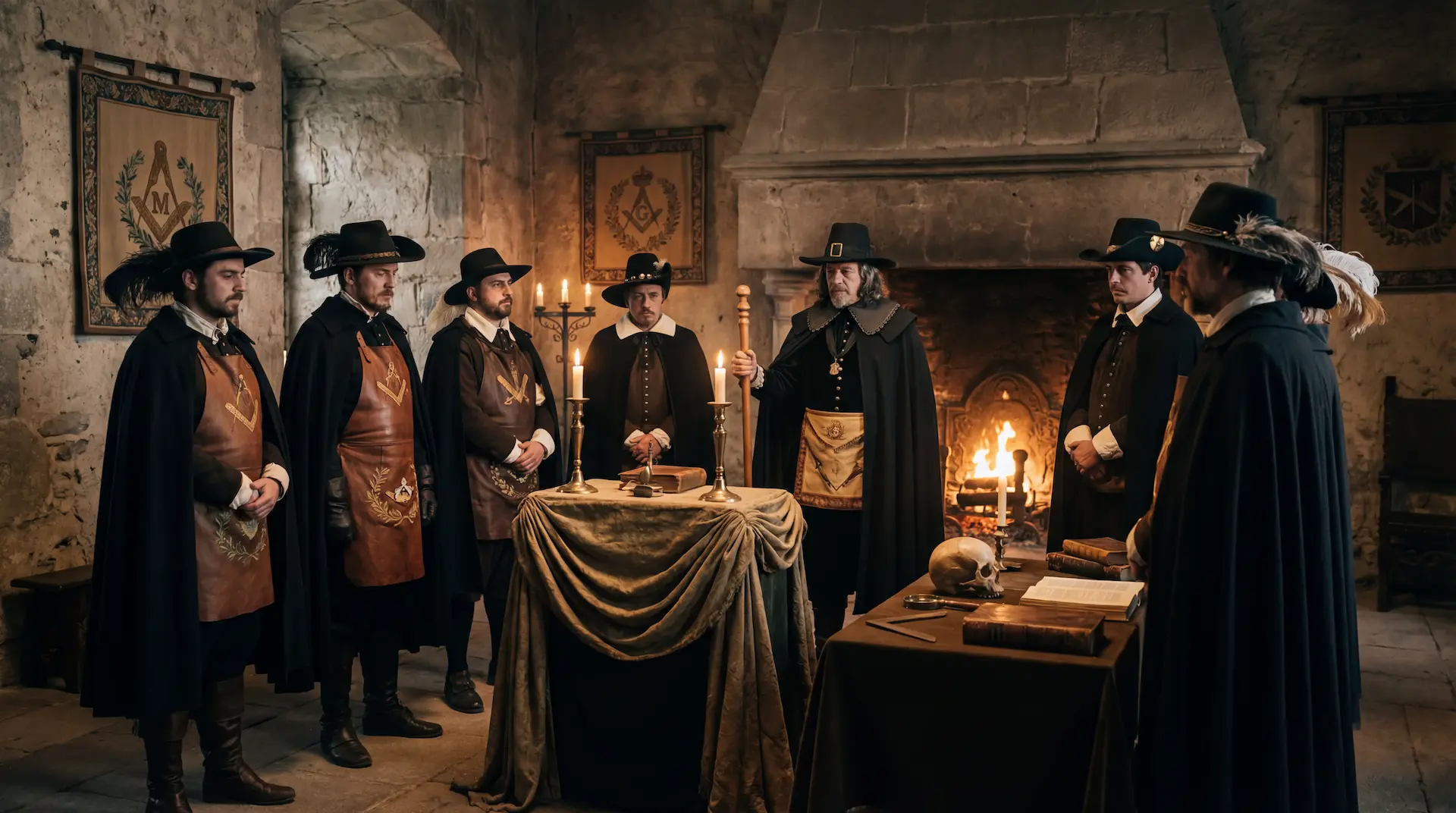 Freemasons on Oak Island→
A Pirate for Sale, 1922
Frederick Blair was fifty-five years old and living in Calgary, three thousand miles from the pit he had been circling since 1893, when he did what every Oak Island man eventually does. He went looking for money.
The advertisement ran on the front page of the Boston Journal of Commerce on 7 December 1922, under the heading "Buried Treasure." It asked for $50,000 in exchange for a half interest. It promised millions within a year if the venture succeeded, and it said, in plain type, that the alternative was a probable eighty per cent loss. Blair called it a speculative venture, partly proven, a good sporting proposition for a party financially able to take a chance. There was no Morgan in it. There was no pirate at all.
The pirate came from the editor. On the leader page of the same issue, beneath the question "Can buried treasure lure Wall Street?", the Journal reached for the most famous vanished fortune it knew. Two hundred years ago, it began, the Welsh buccaneer Sir Edward Morgan descended on Panama and relieved its inhabitants of as much of their wealth as he could carry. He died Governor of Jamaica, rich and respected, and the treasure he took from the Spanish Main was never seen again. Then the pivot: there was a man in New York, a native of Nova Scotia, who said he was certain that this or some other treasure lay 150 feet down on an island near Mahone Bay.
The editor got the name wrong; it was Henry, not Edward. He got the arithmetic wrong; Panama burned in 1671, two and a half centuries earlier. What he got right was the shape of a good story, and he had needed no evidence to make it. Blair, for his part, had only ever promised "this or some other treasure." The hedge was his. The buccaneer was the newspaper's.
The piece drew letters but no cheques. Blair went on writing to strangers for nine more years, until Chappells Limited of Sydney put up the money in 1931. But the Morgan attribution was now in print, and print is patient. William S. Crooker reproduced the editorial in full in Oak Island Gold; Lionel and Patricia Fanthorpe summarised it and confirmed the date. The most durable pirate theory attached to Oak Island had begun life as filler beside a classified advertisement.
Frederick Blair: The Man Who Held Oak Island for Sixty Years→
Blair kept the name. In 1932, with his syndicate holding the Nova Scotia recovery licence over the Money Pit and Chappell's shaft going down, the Halifax Journal ran an editorial in his support that said what Boston had only implied: Morgan was the man behind the pit, Panama was where the money came from, and the drowned harbours of Mahone Bay were exactly where a buccaneer governor might put a continent between his fortune and his creditors. Reginald V. Harris, Blair's attorney and the author of the first serious book on the island, recorded the editorial in 1958 as part of what Blair believed through the thirties, and noted how far the Morgan story travelled in the regional press in those years.
 The Chappell Family and the Vault Beneath Oak Island→
It would be sixty years before anyone tried to argue it rather than assert it. Lionel and Patricia Fanthorpe, in The Oak Island Mystery, made Morgan their favourite among the pirate candidates, judging that he "certainly had enough cash, rank and leadership skills to have enabled him to organise an expedition on a grand enough scale to have constructed the Oak Island labyrinth," and "a far more probable" builder than William Kidd. Their case has three legs. The buccaneers who sailed with Morgan complained bitterly about the Panama share-out, which suggests a surplus that never reached them. As deputy governor of Jamaica he had the authority to send ships where he liked and the discretion not to log where they went. And his removal from office in 1683, followed by his death in 1688, would have cut short any plan to go back for it.
Each leg bears weight. None of them touches Nova Scotia. What the Fanthorpes establish is that Morgan had the means, a motive, and a reason to lose track of his own money. Whether any of it crossed the Gulf Stream, the record does not say.
 Captain Kidd and the Hidden Maps→
The 1932 editorial also surfaces in the séance literature that Blair collected. In a 1937 letter preserved among Blair's papers, a New York spiritualist named John W. Lowden reported communications from a "control" he identified as the spirit of Captain William Kidd, who named the Oak Island depositor as "James Morgan" and gave the date as 1782. Both the name and the date were wrong: Sir Henry Morgan, not James, and 1671, not 1782. Harris, reviewing the letter, observed dryly that Kidd died in 1701 and Morgan in 1688, which left neither well placed to deposit treasure in 1782. The episode is useful as colour rather than evidence. What it establishes is that by the 1930s the Morgan attribution had become attached to Oak Island firmly enough to surface even in mediumistic communications meant to bypass the documentary record.
The Last Years and the Vanished Grave
2 min
Henry Morgan's final years are documented in detail by Dudley Pope's 1977 biography and by the records of the Jamaica Council preserved at the National Archives at Kew. From his 1683 dismissal until his death he lived principally at his Lawrencefield estate in the parish of St. Mary, on Jamaica's north coast, with regular returns to Port Royal. The estate ran sugar and supported a household of his Welsh extended family and his enslaved workforce. His health declined steadily through 1687 and 1688. The physician Hans Sloane, then attending the Duke of Albemarle in Jamaica and whose collection later formed the founding nucleus of the British Museum, treated him in his last illness and recorded the case in his 1707 Voyage to the Islands. Sloane diagnosed dropsy.
Morgan died at Lawrencefield on 25 August 1688. The funeral on the following day was a state occasion. The coffin was carried by Council members and senior planters. The procession moved from Lawrencefield to the family vault at Palisadoes cemetery on the spit that ran out from Port Royal into Kingston Harbour. Ships at anchor in the harbour fired a twenty-two gun salute. A general amnesty was declared on the colony's authority so that Morgan's former buccaneer colleagues could come ashore and pay their respects without fear of arrest. The amnesty was honoured. The attendance list reads as the muster of a Brethren of the Coast assembly.
Four years later, on 7 June 1692, an earthquake of estimated magnitude 7.5 struck Port Royal at eleven forty in the morning. Within minutes the spit on which the Palisadoes cemetery stood liquefied and slid into the harbour. Two thirds of the town followed. Approximately two thousand inhabitants were killed in the initial event, with a further three thousand lost to injury and disease over the following weeks. The cemetery and Morgan's tomb were lost beneath thirty feet of water. Marine archaeology surveys of the Port Royal site, conducted by Donny L. Hamilton and the Texas A&M Institute of Nautical Archaeology between 1981 and 1990, mapped a number of submerged structures and recovered domestic and commercial artefacts. They did not locate Morgan's coffin. The bones of the Welsh buccaneer who carried the Panama treasure into and out of recorded history are still somewhere on the floor of Kingston Harbour, or no longer anywhere at all.
The Hanselmann Expedition
2 min
Modern archaeology has begun to recover the physical record of Morgan's fleet. Between 2008 and 2012, an underwater archaeological survey directed by Dr. Fritz Hanselmann of the Center for Archaeological Studies at Texas State University, working with the Waitt Institute and the Patronato Panamá Viejo, conducted a series of expeditions to the mouth of the Chagres River. Five of Morgan's ships are known to have run aground on the Lajas Reef and sunk during the approach to Panama in December 1670 and January 1671. The flagship Satisfaction was among them. The expedition's stated goal was to locate the wrecks and document their cargo.
In 2010 the team recovered six iron cannons from the reef. The cannons have been preliminarily identified as English-pattern guns of the period, consistent with the armament of the lost ships. In 2011 the team located and photographed a fifty-two-foot-by-twenty-two-foot section of a wooden ship's starboard hull, partially buried in the silt at a depth of around thirty feet. Among the debris associated with the hull section were unopened wooden chests. The chests were left in situ and the find site reported to the Panamanian cultural authorities, with whom the recovered material has been deposited for analysis and conservation. A small number of additional artefacts, including a chest containing wooden boxes that may have held trade goods, were also documented during the 2012 season.
The Hanselmann work has been published in conservation journals and presented at meetings of the Society for Historical Archaeology. As of the most recent reports, conservation of the recovered material is continuing. The contents of the unopened chests have not yet been made public. What the work has established is that Morgan's fleet did sustain real losses at the Chagres mouth in December 1670 and January 1671, that those losses included material that had been loaded for the operation, and that some of that material is now in the custody of the Panamanian government pending full analysis.
For the Oak Island question, the work cuts both ways. The Chagres losses occurred before Morgan reached Panama; the Lajas Reef wrecks went down with whatever the fleet had carried into the operation, not whatever it carried out. They do not account for the disputed Panama share-out. They do confirm, however, that the surviving and returning ships of Morgan's fleet were a smaller force than the one that had sailed from Cape Tiburon, which raises the per-ship value of whatever made it back to Port Royal. The Panama wealth that did return to Jamaica returned aboard fewer vessels and was concentrated in fewer hands. Both of those facts are consistent with the documentary record of a contested share-out.
Morgan and the Oak Island Question
2 min
Henry Morgan's case for Oak Island does not rest on a physical artefact recovered from Mahone Bay. It rests on four documented points that, taken together, make him the strongest of the named-pirate candidates.
First, the Panama wealth was real and was contested. Exquemelin's account of the disputed share-out at Chagres is one of the most thoroughly cross-referenced pieces of buccaneer history in the seventeenth-century record. The complaint that Morgan retained more than he declared was made by the men who had earned the shares, was repeated in print within seven years of the raid, and was answered by Morgan only through a libel suit that addressed the description of his person rather than the disposition of the goods. The gap between Panama and Jamaica is documented in primary sources.
Second, Morgan's political cover from 1672 onward was unusual. A knighted Crown servant, sitting as a Vice-Admiralty judge in the Caribbean and corresponding regularly with Whitehall, had access to Crown shipping, to discreet captains, and to the routine movement of private cargo that characterised colonial trade. The operation required to move a portion of the Panama wealth out of Jamaica and into a hidden cache, anywhere on the Atlantic seaboard, was well within the practical reach of a man in his position.
Third, the Brethren of the Coast network reached into Nova Scotia waters. The 1688 Nicholson letter places a Brethren prize ship at Port-la-Bare in Nova Scotia in the year of Morgan's death, in the keeping of crews affiliated with Yankey Willems and Jacob Evertson. The continuity is operational rather than evidentiary, but it removes the geographical objection that has been raised against pirate-era Oak Island theories more broadly. The men who sailed under Morgan, and the captains who succeeded him in the senior ranks of the Brethren, were demonstrably present in the waters Oak Island sits in.
Fourth, the Morgan attribution is documented in print at Oak Island. The 1932 Halifax Journal editorial put his name on the Money Pit in the most direct terms possible, in the period when the Blair syndicate was actively working the site. The piece was endorsed in subsequent Nova Scotia press coverage and remains the most explicit early naming of any pirate by a regional newspaper of record in connection with Oak Island. Whatever the editorial's evidentiary weight, it is part of the Oak Island documentary record in its own right, and any account of the pirate-era theory that does not acknowledge it is incomplete.
The Hanselmann expedition has begun to recover the physical traces of Morgan's lost fleet at the Chagres mouth. The Panama wealth that returned with him to Jamaica is harder to trace. The Lawrencefield estate, the Port Royal vault, and the 1692 earthquake have closed most of the documentary routes by which it might once have been recovered. What remains is the gap between the Panama Morgan attacked and the Jamaica he left behind, and the operational network through which a portion of that wealth could have moved north. The 1932 editorial named the destination. The case for Henry Morgan and Oak Island has rested there, in print and in serious consideration, for nearly a century.
Sources
6 min
This article draws on primary contemporary accounts of Morgan's career, the standard modern biographies, scholarship on the Brethren of the Coast and the Golden Age of Piracy in Atlantic waters, current marine archaeology of Morgan's lost ships, and the established Oak Island reference literature. Every named claim above traces to one of the following sources.
Contemporary and Early Sources, 1671 to 1739
- Alexandre Olivier Exquemelin, De Americaensche Zee-Roovers, Jan ten Hoorn, Amsterdam, 1678. The contemporary buccaneer's eyewitness account of Morgan's career through Panama, written by a French-born ship's surgeon who sailed with the Brethren of the Coast through the 1660s. The work passed into English in 1684 as The Buccaneers of America, published in London by William Crooke, and triggered Morgan's successful libel action against the publisher in 1685.
- Charles Leslie, A New and Exact Account of Jamaica, R. Fleming, Edinburgh, 1739. The first sustained Jamaican history by a colonial author, which provides the narrative of Morgan's silent departure from Chagres in March 1671 and his later civil career.
- Hans Sloane, A Voyage to the Islands Madera, Barbados, Nieves, S. Christophers and Jamaica, two volumes, B. M. for the author, London, 1707 and 1725. The clinical account of Morgan's final illness by the Royal Society physician who attended him in 1688.
- State Papers, Colonial, America and West Indies, series CO 1, The National Archives, Kew. The contemporary administrative record of Modyford's commission, Morgan's commission, the Treaty of Madrid correspondence, and the 1672 recall to London.
- John Romeyn Brodhead, ed., Documents Relative to the Colonial History of the State of New York; Procured in Holland, England, and France, volume three, Weed, Parsons and Company, Albany, 1853. Contains the August 1688 letter from Captain Francis Nicholson to Thomas Povey describing the Yankey Willems and Jacob Evertson company and the Port-la-Bare prize ship.
Modern Biographies of Henry Morgan
- Dudley Pope, Harry Morgan's Way: The Biography of Sir Henry Morgan 1635–1688, Secker and Warburg, London, 1977. The standard scholarly biography, drawing on the Jamaica Council records and the State Papers Colonial. Source for the final years at Lawrencefield, the funeral, the twenty-two gun salute, and the estate inventory.
- Peter Earle, The Sack of Panamá: Captain Morgan and the Battle for the Caribbean, Thomas Dunne Books, New York, 1981, revised as The Sack of Panamá: Sir Henry Morgan's Adventures on the Spanish Main, Thomas Dunne, 2007. The detailed military reconstruction of the 1670 to 1671 campaign, including the muster figures and the share-out dispute.
- Stephan Talty, Empire of Blue Water: Captain Morgan's Great Pirate Army, the Epic Battle for the Americas, and the Catastrophe That Ended the Outlaws' Bloody Reign, Crown Publishers, New York, 2007. The modern popular biography, with attention to the political context in London and the Brethren of the Coast network.
- Terry Breverton, Admiral Sir Henry Morgan: The Greatest Buccaneer of Them All, Glyndwr Publishing, Llanrwst, 2005. The Welsh perspective by a Pembrokeshire historian, with detail on Morgan's Glamorgan origins and family connections.
Golden Age of Piracy and Brethren of the Coast Scholarship
- David Cordingly, Under the Black Flag: The Romance and the Reality of Life Among the Pirates, Random House, New York, 1995. The standard popular history of the period, with the line between privateer and pirate examined through Morgan's career.
- Kris E. Lane, Pillaging the Empire: Piracy in the Americas, 1500–1750, M. E. Sharpe, Armonk, 1998. The academic treatment of the privateering economy of the Spanish Main, with substantial coverage of Port Royal as a buccaneer base.
- Angus Konstam, Buccaneers 1620–1700, Osprey Publishing, Oxford, 2000. The Osprey reference on buccaneer ships, weapons, and tactics, with named profiles of the Brethren captains.
- Angus Konstam, Pirates: An Illustrated History, Skyhorse Publishing, New York, 2007, pp. 118 to 119. Contains the documentation of the 1683 Roatán gathering of the Brethren of the Coast.
- David F. Marley, Pirates of the Americas, ABC-CLIO, Santa Barbara, 2010. Two-volume encyclopaedic reference with full entries on Morgan, Yankey Willems, Jacob Evertson, Laurens de Graaf, and the Brethren confederation.
- David F. Marley, Historic Cities of the Americas: An Illustrated Encyclopedia, ABC-CLIO, Santa Barbara, 2005, pp. 751 to 752. Contains the operational record of Willems and Evertson in the mid-1680s and their attendance at Roatán.
- Marcus Rediker, Villains of All Nations: Atlantic Pirates in the Golden Age, Beacon Press, Boston, 2004. The standard academic treatment of the social organisation of Atlantic piracy.
Marine Archaeology of Morgan's Fleet
- Fritz Hanselmann, "The Search for Captain Henry Morgan's Lost Fleet at the Mouth of the Río Chagres, Panamá," presented at the Society for Historical Archaeology annual conference, 2012, and published in the conference proceedings. The principal archaeological report on the 2008 to 2012 expeditions.
- Fritz Hanselmann, Center for Archaeological Studies, Texas State University, working with the Waitt Institute and the Patronato Panamá Viejo. Multiple field reports, 2010 to 2014, documenting the recovery of six iron cannons, the starboard hull section, and the unopened wooden chests at the Lajas Reef.
- Ker Than, "Captain Morgan's Wrecked Pirate Fleet Discovered Off Panama," National Geographic News, 5 August 2011. The contemporary public-record reporting of the Hanselmann recoveries, with on-site photographs of the cannon retrievals and the hull section. The journalistic record corroborating the Society for Historical Archaeology conference paper above.
- Donny L. Hamilton, "The Port Royal Project: A Submerged Seventeenth Century Town," Underwater Archaeology Proceedings, Society for Historical Archaeology, 1992. Reports the Texas A&M Institute of Nautical Archaeology surveys of the submerged sections of Port Royal between 1981 and 1990, which did not locate Morgan's coffin.
Oak Island Reference Literature
- Reginald V. Harris, The Oak Island Mystery: The Secret of Oak Island, McClelland and Stewart, Toronto, 1958. Frederick Blair's attorney's contemporaneous record of the search, with reference to the 1932 Halifax Journal editorial naming Morgan and to the Lowden séance correspondence.
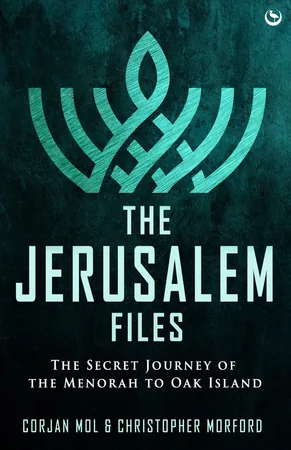
- Lionel Fanthorpe and Patricia Fanthorpe, The Oak Island Mystery: The Secret of the World's Greatest Treasure Hunt, Hounslow Press, Toronto, 1995. Argues for Morgan as the strongest of the named-pirate candidates, citing the Panama share-out anomaly and the political cover of his deputy governorship.
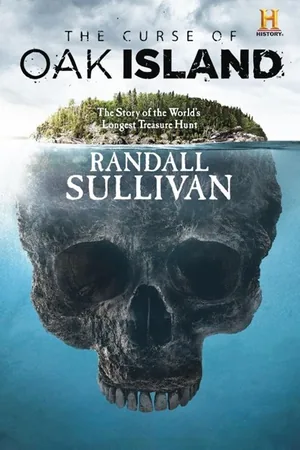
- Randall Sullivan, The Curse of Oak Island: The Story of the World's Longest Treasure Hunt, Atlantic Monthly Press, New York, 2018. The standard modern history of the search, with treatment of Morgan among the candidate pirates and the broader Mahone Bay pirate context.
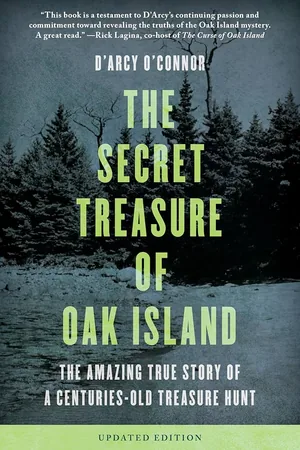
- D'Arcy O'Connor, The Secret Treasure of Oak Island: The Amazing True Story of a Centuries-Old Treasure Hunt, Lyons Press, Guilford, revised edition 2004. The long-form Oak Island history, with discussion of the pirate-era candidates and the Blair syndicate years.
- Scott Clarke, Oak Island Odyssey: A Masonic Quest, Nimbus Publishing, Halifax, 2023. The Belcher-Willems documentation and the 1688 Nicholson letter analysis are drawn from this work, particularly its tracing of the Brethren of the Coast operations into New England and Nova Scotia waters.
Newspaper and Periodical Sources
- Boston Journal of Commerce, 7 December 1922, editorial "Can buried treasure lure Wall Street?", accompanying Blair's front-page advertisement. Reproduced in Crooker (1993), chapter 13; summarised in Fanthorpe and Fanthorpe (1995).
- Halifax Journal, editorial supporting the Frederick Blair syndicate, 1932, naming Sir Henry Morgan as the depositor of the Oak Island treasure and identifying the Panama raid of 1671 as the source of the wealth. Cited in Harris (1958) and Fanthorpe and Fanthorpe (1995). The 1932 editorial is the documented printed assertion linking Morgan to Oak Island and is the basis for the press attention to the Morgan attribution through the Blair years.
Caution on Conflated Identity
- The Welsh privateer Sir Henry Morgan (c. 1635 to 1688) is to be distinguished from Captain Henry Morgan of Tredegar, his cousin, named in his will as "ever-honest cozen, Mr Thomas Morgan of Tredegar" but in the wider literature sometimes given as Henry. The deputy governor of Jamaica and the buccaneer commander at Panama is one and the same person. He was knighted in 1674 and died at Lawrencefield, Jamaica, in 1688.