Iron at 126, cement, oak, soft metal, parchment, 'metal in bars' and 'coin or metal in small pieces'. Ends 155 ft 3 in (Chappell) or 157 ft 6 in (Blair).
No public source gives this hole's position.
What the Drill Found
-
0 ft
SurfaceTop of the hole
-
126 ft
-
126 ft
MetalIron; 3 in pipe could not pass; 1.5 in drill bypassed it through puddled clay
Lewis (1957): the iron that stopped the casing at 128 ft (1896 surface) "was found to be an anchor fluke", i.e. the fluke taken from the Chappell Shaft wall in 1931 at 116 ft.
Chappell and Blair (agree)
-
25 ft
-
151 to 152.7 ft
Cement20 in of cement
Analysed as cement at the time; Harris and MacPhie note it could be impure limestone William Chappell (sworn statement, 1929) Cement/concrete vault layer →
-
152.7 to 153.1 ft
Wood5 in of oak
William Chappell (1929)
-
153.1 to 153.3 ft
DocumentAuger dropped 2 in onto soft metal; parchment fragment in the cuttings (5/16 in, letters 'v i' in ink)
Identified at the time as sheepskin with India ink Parchment now held by Triton Alliance (as of 2013).
William Chappell (1929) 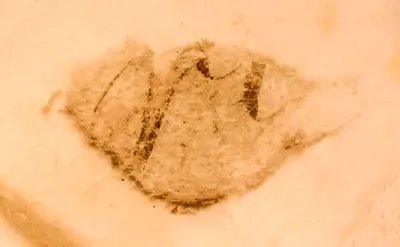 Parchment fragment →
-
153.3 to 155.3 ft
Metal4 in of 'metal in bars', then 20 in of 'coin or metal in small pieces'; chisel stopped on metal bars at 155 ft 3 in
No coin or bars have ever been confirmed (Harris and MacPhie)
William Chappell (1929)
-
153.7 to 154.3 ft
Cement7 in of cement
Conflicts with Chappell's depths.
Frederick Blair (record, via R.V. Harris and O'Connor) Cement/concrete vault layer →
-
154.3 to 154.7 ft
Wood5 in of oak
Frederick Blair
-
154.7 to 154.8 ft
DocumentAuger dropped 2 in onto soft metal; parchment fragment in the cuttings
Conflicts with Chappell's depth.
Frederick Blair Parchment fragment →
-
154.8 to 157.5 ft
Metal4 in of 'metal in bars', then 28 in of 'coin or metal in small pieces'; chisel stopped on metal bars at 157 ft 6 in
Conflicts with Chappell's depths.
Frederick Blair
Rows are in depth order; the column on the left is the hole, and a figure between rows is the stretch with nothing logged. Depths as reported by each source.
Sources
- Harris and MacPhie, Oak Island and its Lost Treasure, 3rd ed. (2013); scan p54-55
- Harris and MacPhie, Oak Island and its Lost Treasure, 3rd ed. (2013); scan p54-55; J.W. Lewis, Notes on Hedden, Hamilton and other work (1950) p3
- Harris and MacPhie, Oak Island and its Lost Treasure, 3rd ed. (2013); scan p54
- Harris and MacPhie, Oak Island and its Lost Treasure, 3rd ed. (2013); scan p54, p57
- Harris and MacPhie, Oak Island and its Lost Treasure, 3rd ed. (2013); scan p55
- Positions and depths: see how we know this on the Money Pit Map.