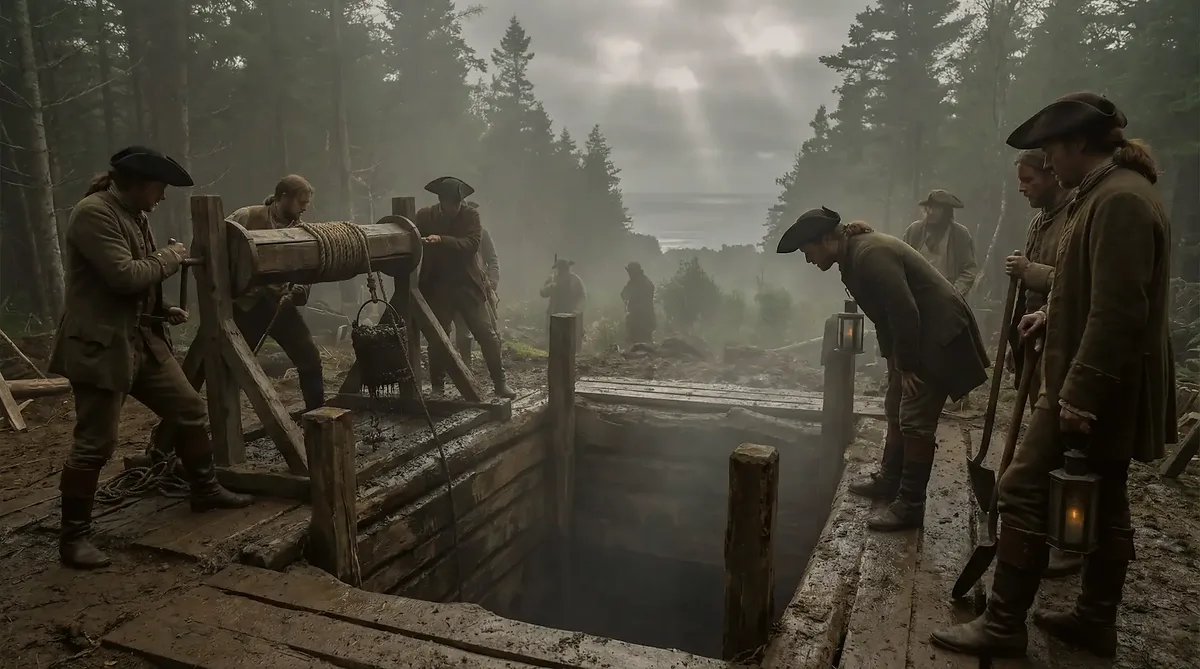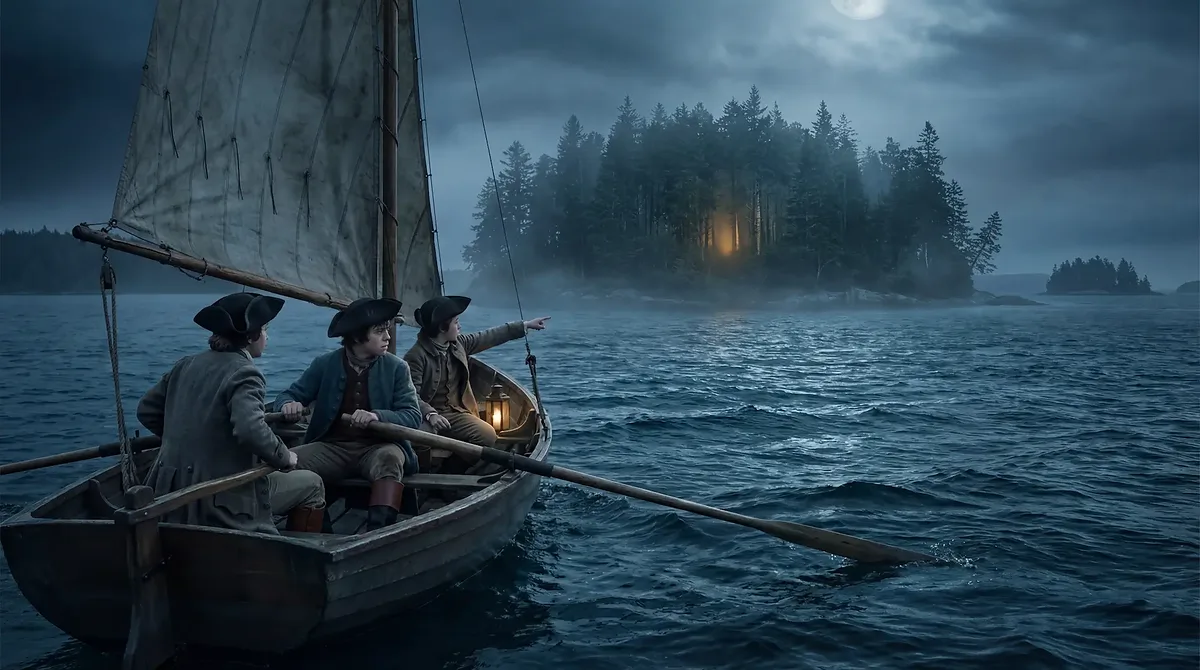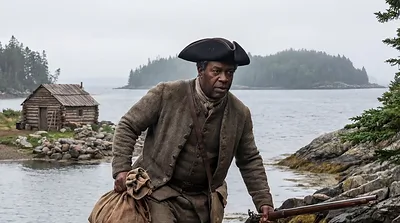
In March 1580, a small ship called the Squirrel left England with ten crewmen aboard. She crossed the Atlantic, made a coastal reconnaissance of the North American shore, and returned in roughly three months. Her pilot was a Portuguese-born former pirate named Simao Fernandes. The Squirrel had been fitted out by Sir Humphrey Gilbert under royal authority granted by Queen Elizabeth I in 1578, and Fernandes was the most experienced Atlantic navigator in English service. His charts of the North American east coast survive in the Cotton Collection at the British Library, and one of them was used by Dr. John Dee later that same year to compile the map by which the English crown laid claim to all of North America north of Florida.
Fernandes had been born in roughly 1538 on the island of Terceira in the Portuguese Azores. He was the only documented Portuguese-Azorean navigator in the Elizabethan court network at the height of England's colonial planning, and his birthplace places him at the geographic origin of the artifact evidence the Oak Island team has identified as Portuguese-Azorean. The dry-stone wall on Lot 26 was matched in 2026 by Portuguese researcher Francisco Nogueira to the construction tradition at Serreta on Terceira. The stone shots recovered from Lot 16 and the Money Pit area were identified by geology professor Dr. Robert Raeside as volcanic rocks consistent with the Azores. The Portuguese deck spike from Lot 5 was authenticated as 14th-century Portuguese by archaeologist Tiago Rodrigues at the Angra do Heroismo Museum, on Terceira itself.
Fernandes is not the only figure who could explain that material on the island but he is a named figure who fits the historical window, the geographic origin, and the operational profile. This is his story.
 Serreta→
 Rock Wall (Lot26)→
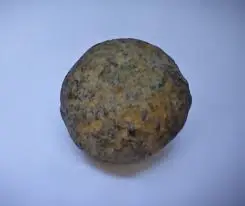 Stone Shot (Money Pit)→
Terceira
1 min
Terceira is the third-largest island of the Azores, an archipelago of nine volcanic islands roughly 1,500 kilometres west of mainland Portugal. The Azores were claimed for Portugal by Prince Henry the Navigator in 1427, and the Order of Christ, the Portuguese Templar successor founded in 1318 by King Denis, took responsibility for the colonisation. Terceira was settled by Flemish and Portuguese colonists from the 1450s onward, and by the early 1500s the island had become a strategic refuelling stop on the return voyage from the Americas. Spanish treasure fleets sailing from Veracruz and Havana routinely stopped at the port of Angra do Heroismo on Terceira's south coast before completing the crossing to Cadiz.
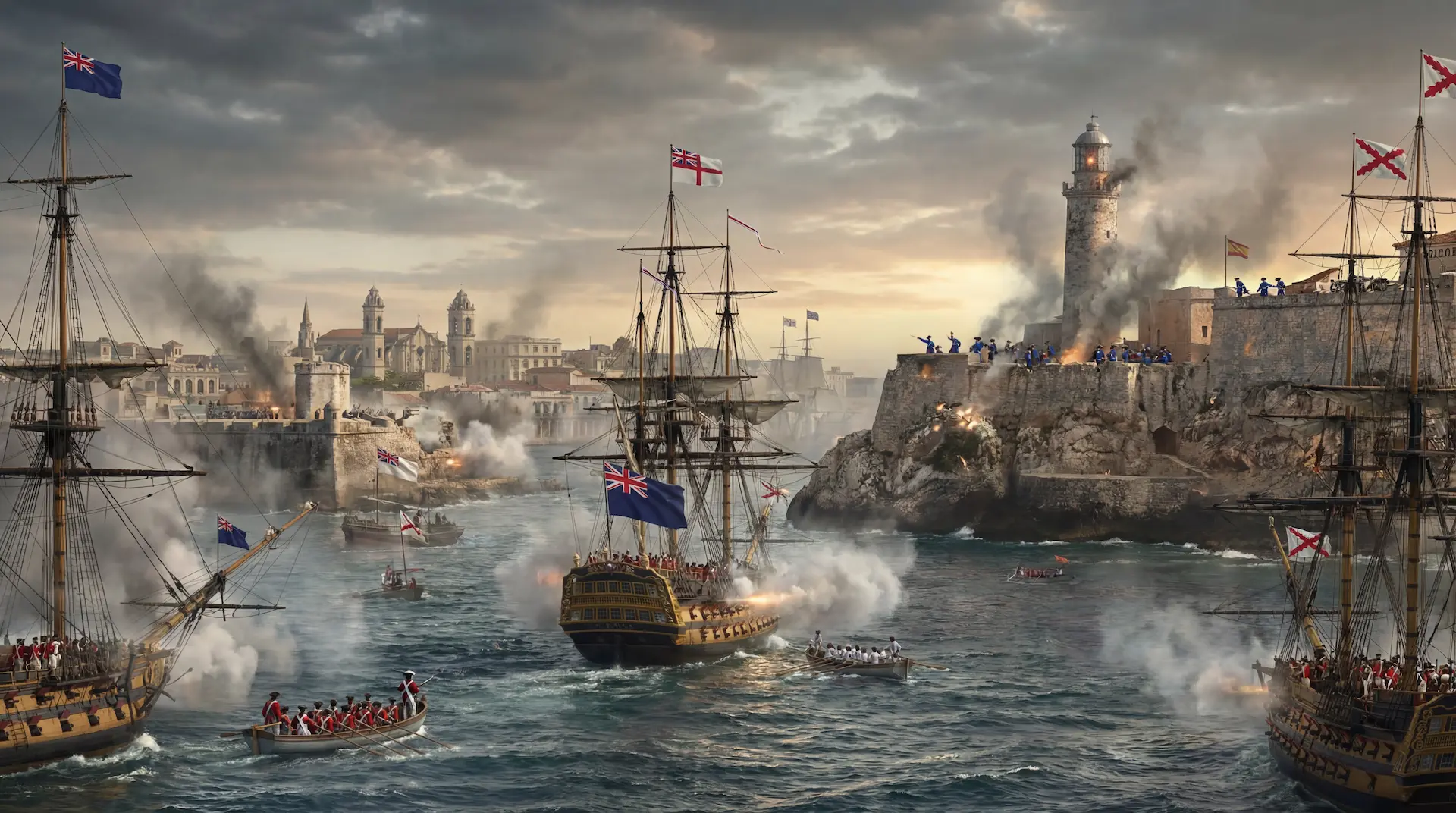 The Sack of Havana→
This is the world into which Simao Fernandes was born around 1538. The birthplace is established in the standard documentary edition of the period prepared by David Beers Quinn for the Hakluyt Society, The Roanoke Voyages 1584-1590, which draws on the Spanish diplomatic correspondence of the 1570s and 1580s and on the Madox diary of 1582 for the early biographical details. Beyond the birthdate and birthplace, the documentary record of his Azorean childhood is thin. What can be reconstructed is that he must have been bilingual by adolescence, since Spanish was the language of Atlantic navigational training, and he must have been on the move by his teens, since by his mid-twenties he had been admitted to the most exclusive maritime training institution in Europe.
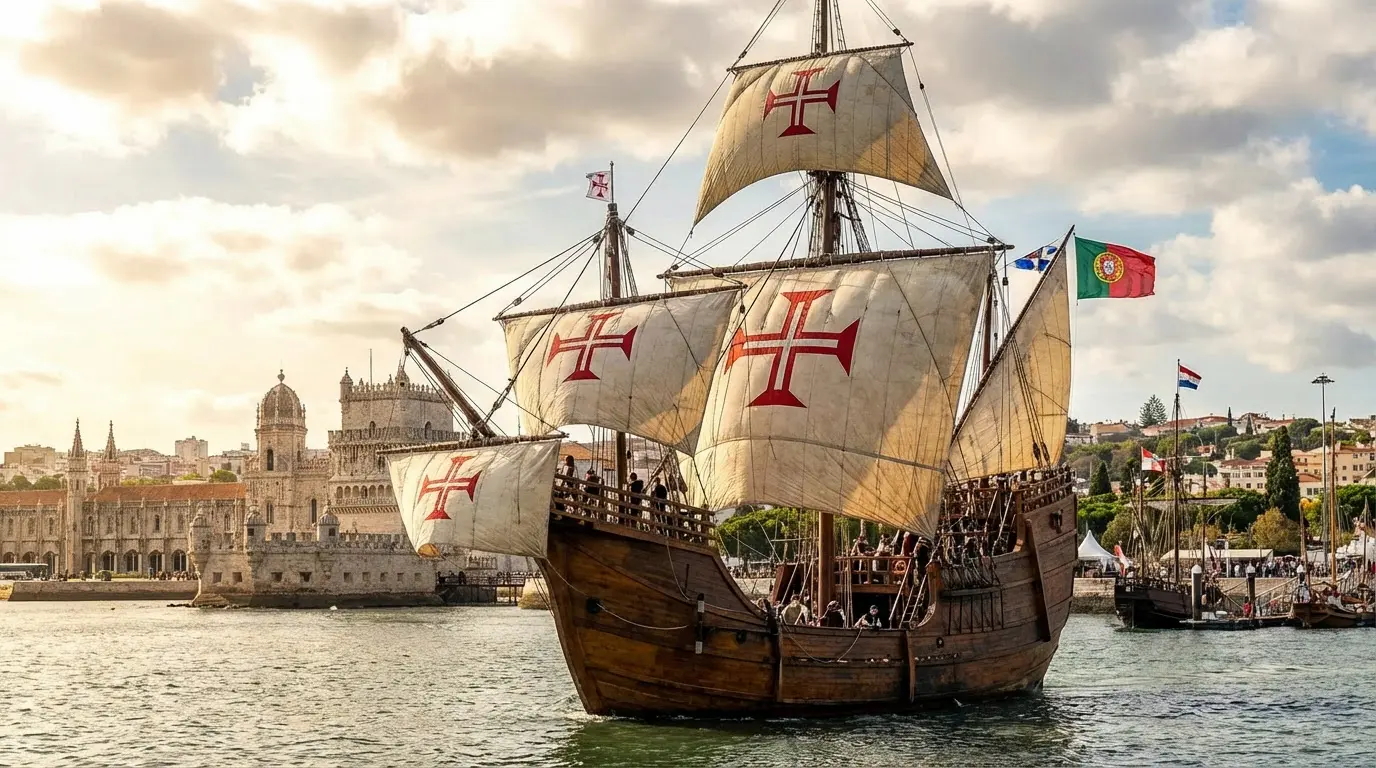 The Portuguese: The Order of Christ→
Seville and the Casa de Contratacion
1 min
The Casa de Contratacion de las Indias in Seville was the Spanish Crown's master institution for Atlantic navigation, founded in 1503 by Queen Isabella I of Castile. It controlled all licensed trade with the Indies, trained the pilots who would sail the Crown's ships, and maintained the Padron Real, the master chart from which all other Spanish charts of the Atlantic were copied. Foreign pilots were rarely admitted. Fernandes was one of them. The fact of his Casa training is documented by Quinn's Set Fair for Roanoke (1985), drawing on the Spanish naval records preserved at the Archivo General de Indias in Seville. The Encyclopedia Virginia entry on the Roanoke Colonies, published by the University of Virginia Press, describes him as "the Azorean-born pirate Simon Fernandes" and credits him with the navigational expertise that drew Walsingham's interest a decade later.
The training Fernandes received in Seville was the sixteenth-century equivalent of state-controlled cryptography. The Spanish Crown treated chart-making, dead-reckoning navigation, and the secrets of the Atlantic currents as protected technology. A Portuguese-Azorean pilot trained at the Casa would have known the routes home from the Indies in detail. He would have known where the convoys passed, where they wintered, and where the storms diverted them. He would, in short, have been precisely the kind of asset that an enemy of Spain would want to acquire. By the early 1570s, Fernandes had stopped serving the Spanish Crown and started raiding its shipping.
The Welsh Coast
1 min
The Welsh pirate John Callis operated out of the Bristol Channel through the 1570s. He attacked Spanish, French, and English shipping along the south Welsh coast, sheltered by corrupt local officials, and at his peak commanded a small flotilla of ships. He was one of the most successful pirates of the Elizabethan age before his capture and execution in 1576. Simao Fernandes was one of his men. The two raided Spanish shipping together in the early to mid-1570s, and English colonial records consistently describe Fernandes as Callis's principal navigator during this period.
Callis's hanging in 1576 should have meant the gallows for Fernandes as well. The Portuguese Ambassador in London, Francisco Giraldi, was actively seeking his extradition. The charge against Fernandes was the murder of seven Portuguese sailors during one of the Welsh-coast raids. He was arrested in 1577. Quinn (1955) traces the case through the surviving Privy Council records and through Giraldi's correspondence to the Portuguese Crown: Fernandes was facing execution on piracy charges when Sir Francis Walsingham intervened.
Walsingham
1 min
Sir Francis Walsingham was Queen Elizabeth I's Principal Secretary and the architect of the English intelligence service. He recognised in the Portuguese pilot a strategic asset worth more than the political cost of his crimes. In 1577 he secured Fernandes's release, baptised him into the Church of England, and made him a naturalised subject of the English Crown. Fernandes acquired the nickname "the Swine" among the English, retained by biographical sources as a personal moniker rather than a contemporary slur.
The Spanish Ambassador to London, Bernardino de Mendoza, wrote King Philip II of Spain in 1578 about Fernandes's new employment. The dispatch is preserved in the Archivo General de Simancas and published in volume two of the Calendar of Letters and State Papers Relating to English Affairs, Preserved Principally in the Archives of Simancas. Elizabeth, edited by Martin A. S. Hume for His Majesty's Stationery Office in 1894. Mendoza describes Fernandes as a Portuguese "thorough-paced scoundrel" who knows the North American coast intimately and has been supplying England with detailed information about it. The Ambassador's letter establishes two facts: by 1578 Fernandes was already employed in English colonial planning, and Spanish intelligence considered him a credible threat to Spain's American empire.
Walsingham assigned Fernandes as pilot to Sir Humphrey Gilbert, who had received a six-year grant from Queen Elizabeth on 11 June 1578 to explore and settle, on her behalf, "remote, heathen and barbarous lands" not already claimed by a Christian prince. The original patent is preserved in the National Archives at Kew and printed in Hakluyt's Principal Navigations of 1589. Gilbert was the half-brother of Walter Raleigh. The two would become the front-of-house figures for English North American claims through the next decade. Fernandes was the technical instrument by which their voyages would be made.
The Squirrel, 1580
2 min
An eleven-ship fleet under Gilbert and Raleigh set out in September 1578 with Fernandes piloting Raleigh's vessel Falcon. The expedition was an operational failure. Foul weather scattered the fleet off the coast of Africa, and only the Falcon pressed on. Raleigh and Fernandes attempted a privateering raid on Spanish shipping in the West Indies without a letter of marque, accomplished little, and returned to England without making the Atlantic crossing they had set out to perform.
The 1580 voyage was the result. Gilbert understood that any permanent colony in North America would require a prior reconnaissance, and he commissioned the small frigate Squirrel for the purpose. The contemporary record preserved in Hakluyt's Principal Navigations establishes that the Squirrel carried ten crewmen and was commanded by Fernandes alone. The Encyclopedia Virginia entry on the Roanoke Colonies dates the departure to March 1580 and describes the destination as "New England to the mid-Atlantic coast." Quinn (1985) places the probable landing point on the Maine coast, though the exact location remains unknown.
The voyage took roughly three months end to end. Fernandes returned with a chart of the North American east coast, which he delivered to Walsingham. The chart was passed to Dr. John Dee, the Queen's astrologer, mathematician, and confidential adviser on colonial questions, who used it as a primary source for his own 1580 map. Dee's map was prepared for Queen Elizabeth and used to justify English territorial claims to North America north of Florida, in opposition to the Spanish and French claims already on file. The chart's value as a navigational source is established by William H. Sherman in his 1995 study of Dee's colonial cartography. The Madox diary of 1582, edited by Elizabeth Story Donno for the Hakluyt Society in 1976, records that Fernandes had been trained by Thomas Harriot, Walter Raleigh's mathematician, in the newest methods of celestial navigation in preparation for the voyage.
The Squirrel mission is the single best-documented voyage of pre-Roanoke English reconnaissance to North America. The ship was small enough to enter shallow harbours that larger vessels could not reach, the crew was small enough to be paid off quietly, and the pilot was experienced enough to have made the crossing twice already in Spanish service. Whatever Fernandes saw on the North American coast in the late spring of 1580, the English court took it seriously enough to draw a new map on the strength of it.
An Empire built on a Pirate Chart
1 min
One of Fernandes's charts survives. It is preserved in the Cotton Collection at the British Library, the manuscript collection assembled in the early seventeenth century by Sir Robert Bruce Cotton and bequeathed to the nation in 1702. It is one of the principal sources John Dee used in 1580 to compile the map by which Elizabeth I claimed North America. Researchers including Sherman (1995) and E. G. R. Taylor in her 1930 Tudor Geography describe the chart as showing the east coast of North America with particular detail on the mid-Atlantic littoral.
What the chart contains, in modern terms, is the navigational basis on which English colonial law was founded. Dee's 1580 map was an instrument of state. Its purpose was to demonstrate that the lands north of Spanish Florida were uninhabited by any Christian prince and were therefore available for English settlement under the doctrine of effective discovery. Dee titled the document Britannia's Sovereign Empire and presented it to Elizabeth in person. Fernandes's chart was the underlying technical document on which the legal argument rested.
Roanoke
1 min
Gilbert sailed for Newfoundland in 1583 and died at sea on the return voyage, his small Squirrel lost in a storm off the Azores. The royal patent passed to his half-brother Walter Raleigh. Raleigh assigned Fernandes the same pilot's role in the 1584 reconnaissance voyage to what would become Roanoke, the 1585 colonial expedition, and the 1587 expedition that established the famous Lost Colony.
The Encyclopedia Virginia treatment of the Roanoke voyages, drawing on Quinn's two-volume documentary edition of 1955 and on Karen Kupperman's Roanoke: The Abandoned Colony of 1984, is detailed and unsparing. On the 1587 voyage, Fernandes refused to take the colonists to Chesapeake Bay as Raleigh had directed, insisting instead on landing them at the previous Roanoke site on what is now North Carolina. The Encyclopedia notes that he "was the only one with experience in the region" and that his decision overruled the colonial leadership. The Lost Colony was established at the wrong site under his pilotage. The colonists, including governor John White's grandchild Virginia Dare, the first English child born in the Americas, disappeared between 1587 and White's eventual return in 1590.
Fernandes himself disappears from the record after 1590. Quinn (1985) records his last documented voyage as a sortie with an English fleet to the Azores in that year, a journey from which he most likely did not return alive. The Azores in 1590 were the maritime frontier of the Anglo-Spanish War. Fleets from both nations contested the islands, and a Portuguese-Azorean pilot in English service would have been an obvious target for Spanish naval intelligence. Whether he died in action, drowned in a storm, or was captured and executed in his birthplace, the record does not say.
Serreta
3 min
In April 2026, a research team from The Curse of Oak Island travelled to Terceira in the Azores. The team was led by Rick Lagina, Alex Lagina, Doug Crowell, Peter Fornetti, and researcher Corjan Mol. The purpose was to compare the dry-stone walls in the Serreta region of Terceira against the wall on Lot 26 of Oak Island, which had been carbon-dated in 2023 to a single window of 1474 to 1638.
The visit was significant. Serreta is a parish on the western coast of Terceira. Its construction tradition involves walls of large edge boulders bracketing a core of smaller rubble, identical to the construction Francisco Nogueira had previously identified on Lot 26 from photographs alone. Carbon dating of the Serreta walls places them at approximately 1470 to 1475, the early end of the Lot 26 window. Nogueira, working from local Azorean archives, has documented Order of Christ involvement on Terceira from the mid-15th century onward. Prince Henry the Navigator officially claimed the Azores in 1427 as the order's senior member, though documentary evidence suggests the order was operating in the islands from the mid-1300s.
At the Angra do Heroismo Museum on Terceira, archaeologist Tiago Rodrigues examined three Oak Island artifacts presented by the visiting team: a stone shot, the Pitblado silver coin of Ferdinand I of Portugal minted between 1367 and 1383, and an iron deck spike recovered from Lot 5 in 2023. Rodrigues identified the spike as unmistakably Portuguese and possibly 14th century. The Lisbon Military Museum sergeants Ricardo Lopes and Carlos Magro had previously confirmed in 2022 that the Oak Island stone shots, at 3.9 centimetres in calibre, were a match for the half-Portuguese-pound ball fired by 15th and 16th century Portuguese deck guns. Geology professor Dr. Robert Raeside at Acadia University identified the stones as olivine gabbro and basalt, volcanic rocks consistent with the Azorean hot-spot chain.
Fernandes was born on Terceira in roughly 1538. The Lot 26 wall and the Serreta walls both fall within his lifetime. The stone shots match the era of the cannons he would have known from his Casa de Contratacion training, and his Portuguese-Azorean origin places him at the geographic source of the volcanic stone material. The deck spike sits at the early edge of the dating, in a period when Order of Christ vessels were operating the Azorean route, but a Portuguese-trained pilot in 1580 would have been carrying ironwork of recognisable Portuguese style aboard any vessel he commanded.
None of this establishes that Fernandes personally landed on Oak Island. The Squirrel voyage of 1580 reconnoitred the mid-Atlantic coast, and Maine is the northernmost landing point any source records for it. Nova Scotia is further north. What the artifact record does establish is that material with Portuguese-Azorean origins is on Oak Island, that the construction match is to Fernandes's specific birth island, and that he is the named Portuguese-Azorean navigator of the right period operating in the covert English colonial network. The Squirrel was small, the crew of ten was small, and the three-month round trip is long enough to have permitted a northward sweep beyond the documented landing point. The record does not foreclose it.
Fernandes was a pirate by the legal standards of his time, since he sailed under no English commission during the Welsh-coast years and was tried for piracy in 1577. He was a privateer by the same standards from 1578 onward, since Walsingham's protection placed him in royal service. He was, above all, a navigator, and a navigator who held the chart on which English claims to the North American coast were drawn. Whether his charts also included a quiet harbour on a small island in Mahone Bay, the documentary record does not say. What it does say is that the construction style of his island of birth is on the island, and that he is the named candidate.
Sources
4 min
Primary Documents and Documentary Editions
- Dispatch of Bernardino de Mendoza, Spanish Ambassador to London, to King Philip II of Spain, 1578. Reports the imminent departure of Sir Humphrey Gilbert's expedition and identifies Simao Fernandes as a Portuguese pilot supplying intelligence on the North American coast. Held in the Archivo General de Simancas; published in volume two of the Calendar of Letters and State Papers Relating to English Affairs, Preserved Principally in the Archives of Simancas. Elizabeth, edited by Martin A. S. Hume, four volumes, His Majesty's Stationery Office, London, 1894 to 1899.
- Letters Patent of Sir Humphrey Gilbert, dated 11 June 1578. Granted by Queen Elizabeth I, gives Gilbert six years to discover and possess "such remote, heathen and barbarous lands" as he could find that were not already claimed by a Christian prince. Original in the National Archives at Kew, State Papers Domestic series; printed in full in Hakluyt's Principal Navigations, 1589 edition.
- Hakluyt, Richard. The Principal Navigations, Voyages, Traffiques and Discoveries of the English Nation. First edition, London, 1589; expanded second edition, three volumes, London, 1598 to 1600. Standard scholarly edition: Hakluyt Society Extra Series, twelve volumes, James MacLehose and Sons, Glasgow, 1903 to 1905. Contains the contemporary accounts of the Gilbert and Raleigh voyages on which Fernandes served as pilot, including the 1584 reconnaissance, the 1585 colonial expedition, and the 1587 Lost Colony voyage.
- Quinn, David Beers, editor. The Roanoke Voyages 1584-1590: Documents to Illustrate the English Voyages to North America under the Patent Granted to Walter Raleigh in 1584. Hakluyt Society Second Series, volumes 104 to 105, two volumes. London: Hakluyt Society, 1955. The definitive primary-source edition of the Roanoke expeditions, with the Mendoza letter, the Gilbert and Raleigh patents, the Madox diary extracts on Fernandes's training under Harriot, and the full crew rosters of the 1584, 1585, and 1587 voyages.
- Donno, Elizabeth Story, editor. An Elizabethan in 1582: The Diary of Richard Madox, Fellow of All Souls. Hakluyt Society Second Series, volume 147. London: Hakluyt Society, 1976. Madox sailed as chaplain on the 1582 expedition that Fernandes piloted; his diary is the contemporary source for Fernandes's character, his anti-Spanish convictions, and his navigational training under Thomas Harriot.
- Fernandes chart of the North American east coast, c. 1580. Survives in the Cotton Collection at the British Library, London. Used by Dr. John Dee in preparing his 1580 map of Britannia's Sovereign Empire for Queen Elizabeth I. Discussed by Sherman (1995) and by Taylor (1930), cited below.
- Dee, John. Britannia's Sovereign Empire, manuscript map, 1580. Prepared for Queen Elizabeth to justify English territorial claims to North America north of Florida. Held in the Cotton Collection, British Library.
Academic Reference Sources
- Quinn, David Beers. England and the Discovery of America, 1481 to 1620. New York: Alfred A. Knopf, 1974. The standard academic reference on the early English voyages to North America, with extended treatment of Fernandes's career across the Welsh-coast pirate years, the Walsingham intervention, the 1580 Squirrel reconnaissance, and the Roanoke voyages.
- Quinn, David Beers. Set Fair for Roanoke: Voyages and Colonies, 1584 to 1606. Chapel Hill: University of North Carolina Press, 1985. The accessible scholarly treatment of the Roanoke expeditions on which Fernandes served as pilot, including the 1577 arrest, the Walsingham intervention, the Casa de Contratacion training, the Maine landing of the Squirrel in 1580, and the 1590 Azores voyage from which he did not return.
- Kupperman, Karen Ordahl. Roanoke: The Abandoned Colony. Totowa, New Jersey: Rowman and Allanheld, 1984. Standard academic treatment of the Lost Colony, with detailed analysis of Fernandes's 1587 decision to land the colonists at Roanoke rather than at the Chesapeake site directed by Raleigh.
- Shirley, John W. Thomas Harriot: A Biography. Oxford: Clarendon Press, 1983. The standard biography of Raleigh's mathematician, with documentation of Harriot's role in training Fernandes and other English pilots in celestial navigation in the late 1570s and early 1580s.
- Sherman, William H. John Dee: The Politics of Reading and Writing in the English Renaissance. Amherst: University of Massachusetts Press, 1995. Standard scholarly treatment of Dee's colonial cartography and his use of pilot reports, including those from Fernandes, in compiling the 1580 map of English territorial claims to North America.
- Taylor, E. G. R. Tudor Geography 1485 to 1583. London: Methuen and Co., 1930. Foundational work on the cartographic context in which Dee compiled his 1580 map, with discussion of the navigational sources on which the map was based.
- Encyclopedia Virginia, Roanoke Colonies, The. Charlottesville: University of Virginia Press, ongoing. Peer-reviewed academic encyclopedia entry. Detailed treatment of the Gilbert-Raleigh expeditions, with Fernandes named as the Azorean-born pilot who scouted the mid-Atlantic coast in March 1580 and who piloted the 1585 and 1587 colonial voyages, including the 1587 Lost Colony.
Caution on Conflated Identity
- The Portuguese name Simao Fernandes is shared by several historical figures of different periods. The Azorean-born navigator who concerns this article is the one identified by Quinn (1955, 1974, 1985), Kupperman (1984), and the Encyclopedia Virginia entry on the Roanoke Colonies as the pilot of the 1580 Squirrel reconnaissance and the 1585 and 1587 Roanoke expeditions. He is not to be confused with other holders of the same name in Iberian or Cape Verdean records of the same century.