Skeptics dismiss Oak Island as a sinkhole, a natural phenomenon dressed up with wishful thinking and showmanship. Believers point to over two centuries of physical evidence suggesting deliberate human engineering on a massive scale. The artifacts tell their own stories.
The Oak Platforms
When Daniel McGinnis and his friends began digging in 1795, they discovered layers of oak logs at ten foot intervals. These platforms continued downward as far as they could dig: at 10 feet, 20 feet, 30 feet. Later expeditions found the pattern continuing to 90 feet and beyond.
Oak does not grow in horizontal layers underground. Someone placed those logs deliberately, filling the spaces between them with clay, coconut fiber, charcoal, and putty. Pick marks on the clay walls of the shaft confirmed human excavation. Whatever the Money Pit contains, it was buried with extraordinary care.
 Coconut fibre (Money Pit)→
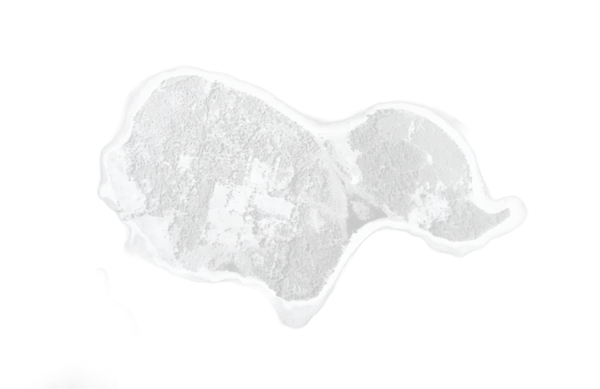 Oak log platforms (multiple)→
The Inscribed Stone
At approximately 90 feet, the Onslow Company reportedly recovered a flat stone unlike anything found naturally on the island. Reports describe it as two to three feet long, resembling dark Swedish granite with an olive tinge. Strange symbols supposedly covered its surface.
The stone's existence is highly disputed. No photographs, rubbings, or contemporary drawings survive. The first detailed description of the symbols did not appear until 1949, nearly 150 years after the stone was allegedly found. The stone itself reportedly passed through several hands: John Smith used it as a fireback in his chimney, then it appeared in a Halifax bookbinder's shop before vanishing entirely by 1919.
The translation offered by Reverend A.T. Kempton, "Forty feet below, two million pounds are buried," may be a later fabrication designed to attract investors. Some researchers believe the stone never existed at all, or that its markings were natural rather than inscribed. The inscribed stone remains one of Oak Island's most controversial pieces of evidence.
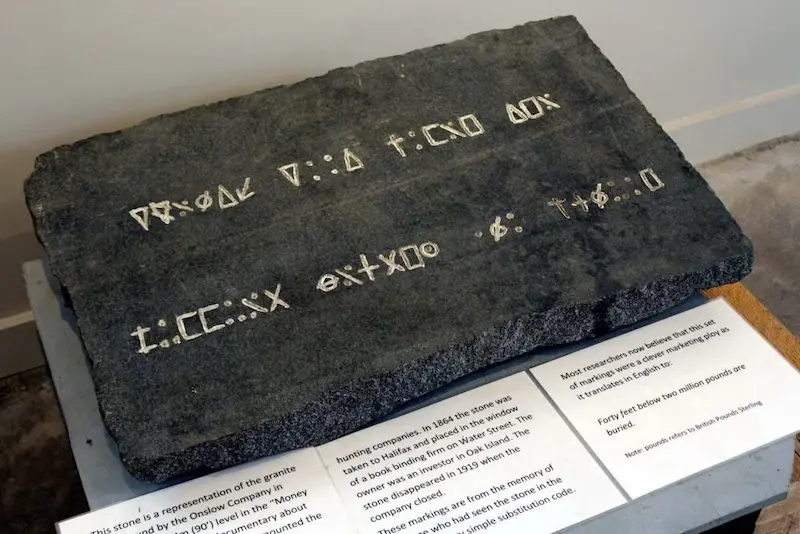 Inscribed stone (90-foot stone)→
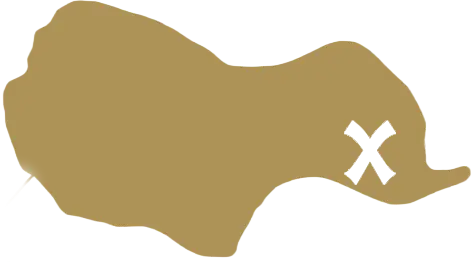
The Gold Chain Links
In 1849, the Truro Company lowered a pod auger to 98 feet and struck something remarkable. The drill passed through spruce, then oak, then encountered 22 inches of what felt like loose metal. When the auger was pulled up, three small gold links, resembling those of an old watch chain, clung to the drill bit.
These three links remain the only gold ever recovered from the Money Pit. They suggest that whatever lies below contains precious metal, but the quantity and form remain unknown.
The Artificial Beach at Smith's Cove
In 1850, workers investigating why the Money Pit kept flooding made a discovery that changed everything. At Smith's Cove, beneath the natural beach, they found an artificial construction: a layer of coconut fiber and eel grass covering five stone box drains arranged in a fan pattern.
The drains converged at a single point near the high water mark, feeding into a tunnel that ran 500 feet inland to the Money Pit at the 111 foot level. Someone had engineered a sophisticated flood system, using the Atlantic tide itself to protect whatever lay below.
The engineering was remarkable. The box drains filtered seawater to prevent clogging. The coconut fiber resisted rot in salt water. A second flood tunnel, discovered in 1898, provided redundant protection from the south shore. Block one tunnel, and the other continued flooding the shaft.
Smith's Cove timber structures (Blankenship, 1969-70)→
The Coconut Fiber
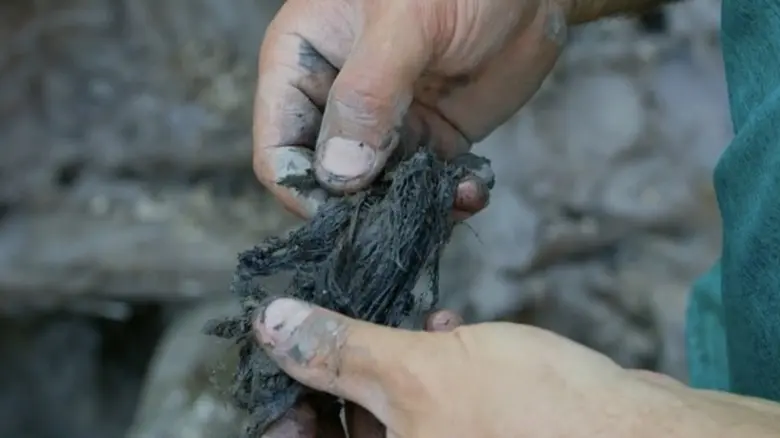
Tons of coconut fiber were recovered from Smith's Cove and from within the Money Pit itself. Workers stacked it like hay on the beach. Tourists carried it away as souvenirs. The Smithsonian Institution confirmed in 1916 that it was genuine Cocos nucifera.
Coconuts do not grow anywhere near Nova Scotia. The nearest source in the 1700s would have been the Caribbean, over 2,000 miles away. Carbon dating of the fiber suggests an age of approximately 700 years, placing it in the 13th or 14th century, well before Columbus reached the Americas.
If the dating is accurate, the coconut fiber predates any known European activity in Nova Scotia by centuries. Someone brought tons of tropical material to a remote island in the North Atlantic, centuries before the Money Pit's official discovery.
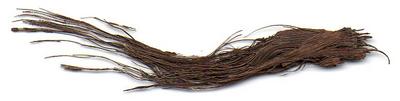 Coconut fibre (Smith's Cove)→
The Parchment
In 1897, Frederick Blair's drilling crew struck something at 153 feet that would tantalize researchers for the next century. Dr. A.E. Porter of Amherst, carefully examining the auger borings, noticed a tiny ball no larger than a grain of rice. Using a magnifying glass, he flattened it and discovered parchment with letters written in India ink.
The scrap was sheepskin, the traditional material for important documents. The letters appeared to be "vi" or "ui" or possibly "wi" in flowing script. A fragment of a word, torn from a larger document buried at extraordinary depth.
Parchment does not occur naturally 153 feet underground. Someone buried a document, or documents, in the Money Pit. The Baconian theorists point to this as evidence of manuscripts. Others suggest ship's logs, maps, or records of deposit.
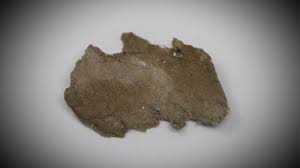 Parchment scrap (H8)→
The Stone Triangle
In 1937, workers discovered a perfect equilateral triangle made of beach stones on the island's surface. Each side measured ten feet. A medial line pointed true north, directly toward the Money Pit.
Two drilled rocks were found 415 feet apart on an east-west line, possibly serving as additional survey markers. Together with the triangle, they suggested the original depositors left a system for relocating their treasure.
The stone triangle was destroyed in 1965 when Robert Dunfield's careless excavation caused erosion that scattered the carefully placed stones. It exists now only in survey notes and photographs.
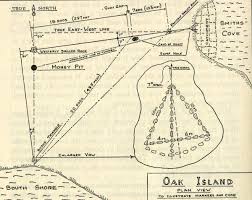 Stone Triangle→
The U-Shaped Structure
In 1970, excavation at Smith's Cove revealed massive logs buried below the low tide line. The timbers measured two feet thick and ranged from 30 to 65 feet in length. They were arranged in a U formation and notched with Roman numerals.
Carbon dating placed the structure around 1720, seventy-five years before the Money Pit's official discovery. The Roman numerals suggest European builders using a standardized marking system. The scale of the logs indicates serious engineering, not casual construction.
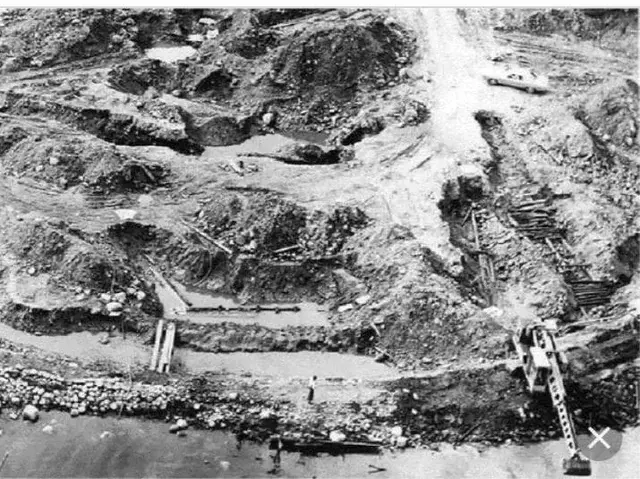 U-shaped wooden structure→
The 1704 Stone
In 1960, the Restall family found a rock at Smith's Cove inscribed with the date 1704. If authentic, it proves activity on Oak Island nearly a century before Daniel McGinnis arrived. The stone provided the first concrete date for pre-discovery construction.
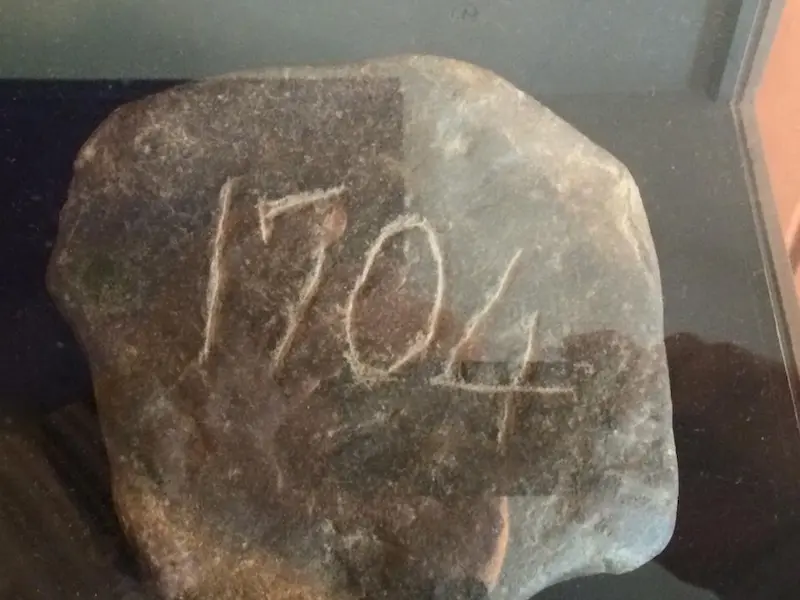 1704 stone→
The Medieval Cross
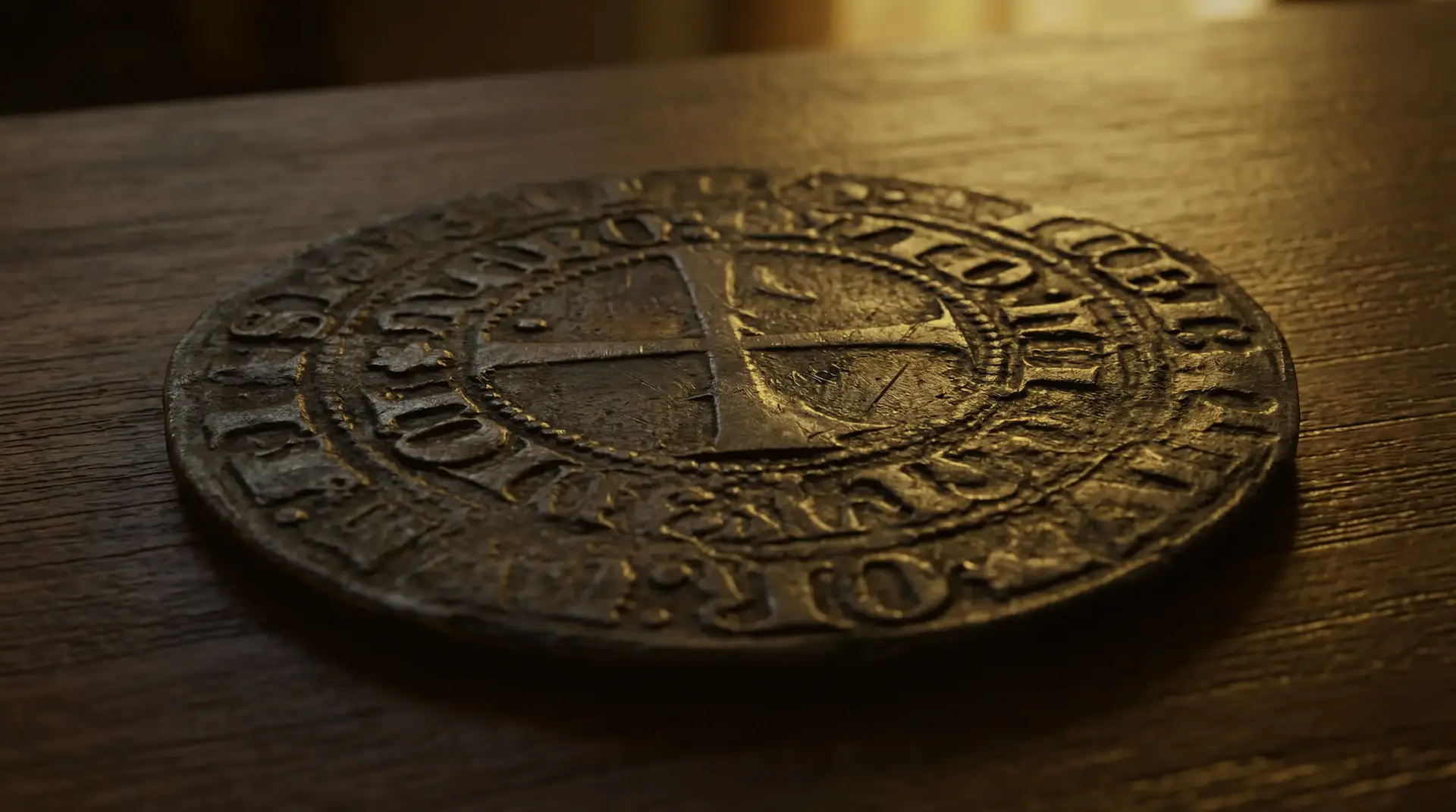
In 2017, metal detectorist Gary Drayton discovered a lead cross at Smith's Cove that may be the most significant artifact found on Oak Island. Testing dated it between 900 and 1300 AD, making it medieval.
The cross bears a striking resemblance to carvings made by imprisoned Knights Templar on the walls of Domme Prison in France, where members of the order were held following the suppression of 1307. The similarity is close enough that researchers traveled to Domme to compare the artifacts directly.
If the cross is genuinely medieval, it suggests a connection between Oak Island and the Templar period. It would be evidence of European presence in Nova Scotia centuries before any documented voyages.
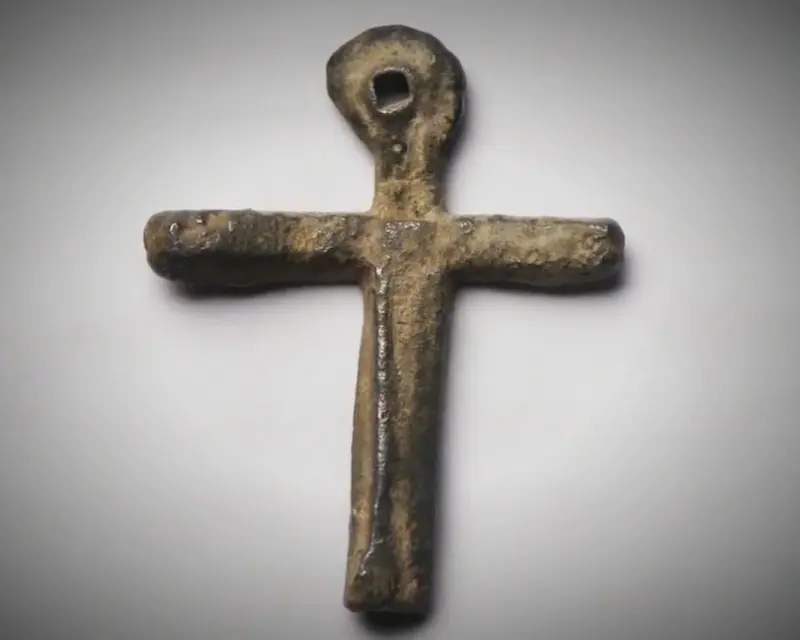 Lead cross→
The Human Bones
In 2017, drilling at borehole H8 recovered human bone fragments from 190 feet underground. DNA analysis at St. Mary's University in Halifax revealed something remarkable: the bones came from two different individuals. One was of European descent. The other was of Middle Eastern origin.
Carbon dating placed both sets of remains between 1682 and 1764. Someone buried at least two people, from different parts of the world, deep in the Money Pit area during the late 17th or early 18th century.
Who were they? Workers who died during construction? Guardians deliberately interred to watch over the treasure? Victims of something darker? The bones raise more questions than they answer.
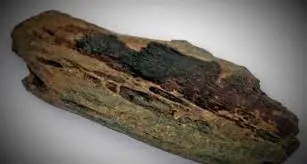 Human bone fragments (2 individuals)→
The Cement
At various depths, drilling has encountered layers of cement that laboratory analysis confirms as man-made. In 1866, cement was found at 146 to 149 feet. In 1971, cement from 165 feet was analyzed by Canada Cement Lafarge, which concluded it "reflects human activity."
Portland cement of the type found at depth was not manufactured in North America until the 19th century. Either the cement was imported from Europe, or the deposits were made more recently than some theories suggest.
What the Evidence Tells Us
Taken individually, each artifact might be explained away. Taken together, they paint a picture of deliberate, sophisticated engineering spanning centuries.
The oak platforms prove someone dug a deep shaft and filled it methodically. The flood tunnels prove they wanted to protect it. The coconut fiber proves they had resources and connections beyond Nova Scotia. The parchment proves they buried documents. The gold links prove they buried something valuable. The medieval cross and Middle Eastern bones prove the story involves more than pirates or colonial settlers.
After 230 years of searching, the evidence indicates that Oak Island holds something worth protecting with one of the most elaborate engineering projects ever constructed in the New World. The question is no longer whether something is buried there. The question is what, and why.