The team launches its first excavation of the triangle-shaped swamp after receiving government permits to drain and dig in the southeastern corner. Billy Gerhardt uses a 16-ton excavator to remove dense muck from above the massive flat stone feature that Rick Lagina and Dr. Ian Spooner discovered while probing the area, a surface measuring roughly 20 feet wide by 70 feet long atop a layer Spooner has dated to the early 1700s. As Billy peels back the mud, the team finds three courses of carefully stacked stones forming an angled structure that tilts upward toward the Money Pit. Spooner describes it as eerily similar to the paved area discovered the previous season but more deliberately constructed, 100 percent built rather than assembled around natural boulders.
Gary Drayton recovers coal and blue-glazed pottery from the spoils, material matching 1700s-era ceramics found deep in the Money Pit area. He also finds what appears to be a fractured decorative brooch, potentially connected to gold-plated brooches recovered over the previous three years on the eastern end of the island. Archaeologists Laird Niven and Aaron Taylor inspect the exposed stone pathway and confirm it as a definitive man-made construction resembling a roadway. Taylor notes the anaerobic swamp environment would preserve artifacts in pristine condition, and the team plans systematic archaeological investigation of the layer beneath the stones.
At the Money Pit, Marty Lagina reviews progress on borehole G-5.5, the ninth in a systematic grid drilled to depths below 200 feet. Charles Barkhouse and Terry Matheson report reaching 230 feet with good core recovery, but dense clay-rich material shows no sign of the catastrophic collapse or debris field. With the COVID-19 pandemic sharply reducing available search time, Barkhouse identifies the next borehole, H-6.5, near the RF-1 shaft where hand-cut timbers with Roman numerals, tunneling tools, and coconut fiber were recovered the previous year from approximately 100 feet, as the most promising target for intercepting the fallen treasure vault.
In the War Room, Doug Crowell presents his research on the serpent-shaped mound discovered on the highest point of Lot 15. Comparing it to the 189-foot-long serpent mounds in Otonabee, Ontario, he notes that the Oak Island feature shares key characteristics: stone and soil construction, roughly four feet in height, positioned on a prominent hillside overlooking water, and flanked by individual cairns. Crowell traces serpent worship to 3000 BC as the world's predominant early religion and connects the serpent symbol to the Knights Templar through the Abraxas seal of a 12th-century grand master, as well as to Freemasonic ritual through the 25th-degree rite of the Serpent and the Cross.
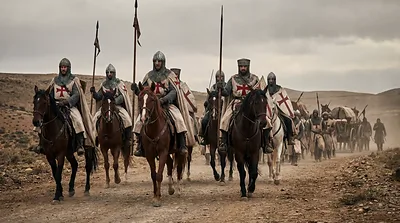
Craig Tester delivers carbon-14 results from charcoal collected within the serpent mound by Alex Lagina, Aaron Taylor, and Miriam Amirault. The sample dates to 1320 to 1440, with no bracketing uncertainty, placing it squarely in the Knights Templar era and aligning with Zena Halpern's reported Templar map of Oak Island and the lead cross found at Smith's Cove. Taylor calls the date transformative, noting that pre-1496 European activity in the region was previously attributed only to the Vikings. Near the stone pathway, Gary Drayton and Jack Begley recover a heavy iron object with a punched hole that Drayton identifies as a plumb bob dating to the 1600s or 1700s, a leveling tool used for digging shafts and tunnels that reinforces evidence of substantial underground construction on the island well before 1795.